
Machaerium humboldtianum
Machaerium humboldtianum
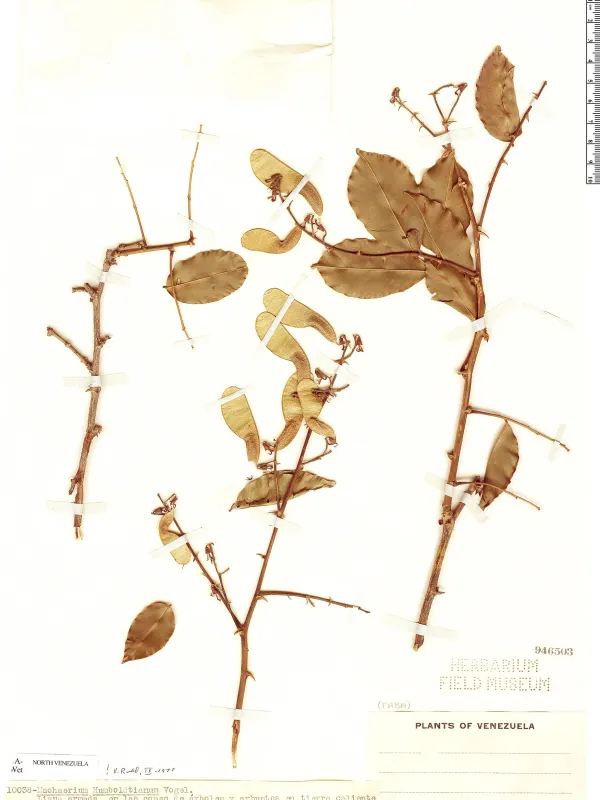
Description
Growing requirements
Machaerium humboldtianum is a tropical woody plant belonging to the Fabaceae family. Native to South American forests, this species is highly valued for its durable and aesthetically pleasing timber, which is sought after for high-end carpentry and furniture production.
The culture thrives in tropical climates characterized by constant high temperatures and consistent rainfall. It does not possess significant cold hardiness, making it suitable only for equatorial or near-equatorial regions where frost is absent throughout the year.
Regarding soil conditions, this tree demands well-drained, nutrient-rich soils. Waterlogging is detrimental to the root system, so selecting sites with excellent natural drainage or implementing artificial drainage is essential for successful growth.
Light availability is a critical factor for the development of Machaerium humboldtianum. While young saplings may survive under partial canopy, mature specimens require significant direct sunlight to maximize biomass production and ensure the healthy development of their structural wood.
In agroforestry systems, this plant is also appreciated for its ability to fix nitrogen in the soil, potentially improving the overall nutrient profile of the land. This makes it a sustainable choice for mixed-species plantations in tropical agriculture.
Main diseases and pests
The primary threats to this species include various wood-boring insects. Larvae of beetles can penetrate the trunk, creating galleries that compromise the structural integrity and aesthetic value of the harvested timber, leading to significant economic losses.
Fungal diseases are a major concern, particularly in environments with high humidity and poor air circulation. Root rot is a common issue when the soil remains saturated for extended periods, weakening the tree's health and increasing its susceptibility to further infections.
Leaf blight and various foliar pathogens can affect the plant during the rainy season. While these infections rarely kill the tree outright, they can drastically reduce the photosynthetic capacity, causing stunted growth and reducing overall yields.
Integrated Pest Management (IPM) is crucial for managing these threats. This includes the implementation of rigorous monitoring programs to detect early signs of infestation and the removal of infected plant material to prevent the spread of diseases.
Maintaining proper tree spacing is a key preventative measure. Adequate space allows for better airflow through the canopy, reducing the likelihood of moisture accumulation that favors the proliferation of harmful fungi and insects.