
Lycopersicon pennellii
Lycopersicon pennellii
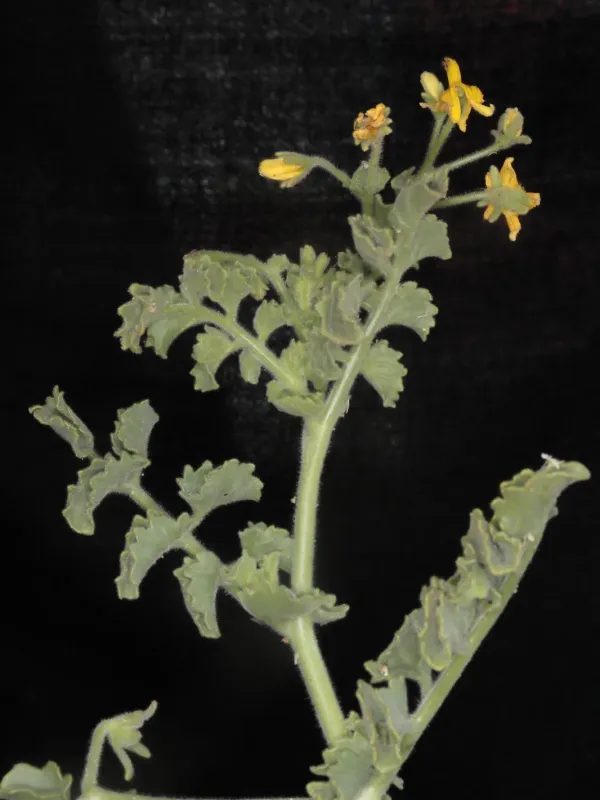
Description
Growing requirements
Lycopersicon pennellii, taxonomically classified as Solanum pennellii, is a wild relative of the cultivated tomato belonging to the Solanaceae family. It is native to the arid western slopes of the Andes mountains in Peru, specifically in desert-like environments.
The plant is highly specialized to survive in extreme conditions. It possesses unique morphological adaptations, including specialized glandular hairs that help regulate water loss and protect the plant from environmental stressors.
In terms of soil requirements, this species thrives in well-drained, nutrient-poor substrates, such as sandy or rocky soils. It is exceptionally tolerant to salinity, a trait that has made it a primary subject of study in plant physiology and genetics.
Climate requirements for this species are characterized by high solar radiation and significant diurnal temperature variations. It has evolved to perform photosynthesis efficiently even under low-water availability conditions that would wilt most commercial tomato varieties.
Agricultural use of Lycopersicon pennellii is strictly confined to breeding and scientific research. It is a key source of beneficial alleles for breeding climate-resilient tomato cultivars, particularly for drought and salt tolerance.
Main diseases and pests
In its native habitat, the plant is remarkably resistant to many common pests. However, when introduced into greenhouse environments, it can become susceptible to pests that typically plague cultivated tomatoes, such as whiteflies.
Spider mites are a common threat, especially in warm and dry greenhouse conditions. Despite the protective hairs on the foliage, heavy infestations can still occur if the environment is not monitored regularly.
Fungal diseases like powdery mildew can emerge if the air circulation is inadequate or if there is excessive humidity in the growing environment. Maintaining a low-humidity, high-ventilation regime is essential for health.
Root rot is the most serious threat caused by human management errors, specifically overwatering or poor soil aeration. Because the plant is a xerophyte, it lacks the ability to cope with waterlogged root zones.
Viruses transmitted by insect vectors pose the greatest danger to experimental populations. Protecting the integrity of the germplasm requires rigorous quarantine procedures and the use of insect-proof netting in research facilities.