
Lycium grevilleanum
Lycium grevilleanum
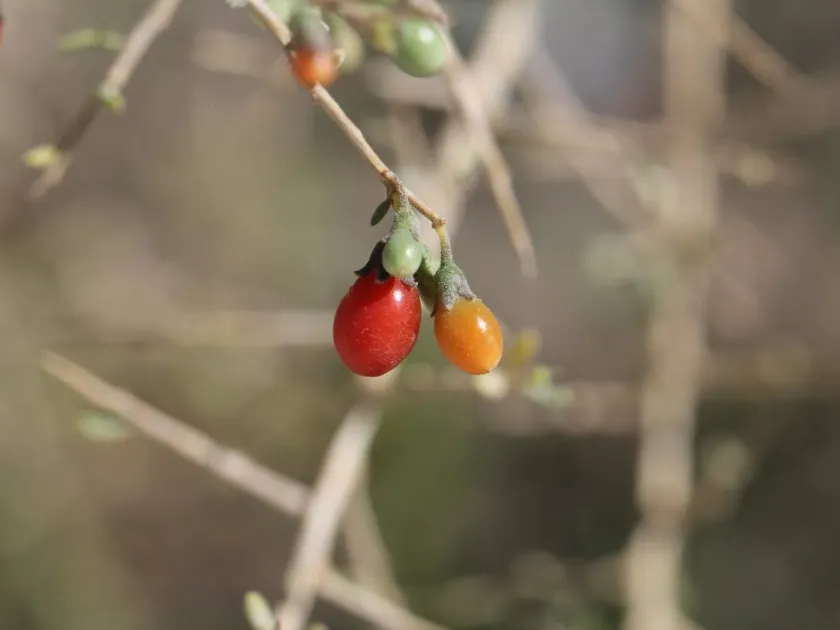
Description
Sowing dates
Lycium grevilleanum is a perennial shrub belonging to the Solanaceae family, native to the arid regions of Argentina. Sowing typically occurs after the berries mature, usually during the late summer to autumn season, when soil temperatures are conducive to germination.
In nursery environments, seeds require stratification to enhance germination vigor. Planting in early spring allows the seedlings to establish a strong root system before the onset of extreme summer heat.
The seeds should be sown in a light, sandy, or well-draining substrate enriched with minimal organic matter. It is crucial to sow the seeds at a shallow depth, as they require sufficient exposure to light for successful germination.
Seedlings show moderate growth rates and should be pricked into individual containers once the second pair of true leaves emerges. Maintaining consistent soil moisture during the initial stage is vital for survival.
Transplanting to the permanent field site is best performed when the seedlings are one year old. This ensures that the plant has developed sufficient resistance to withstand open field conditions and potential environmental stress.
Growing requirements
As a species adapted to arid environments, Lycium grevilleanum thrives in areas with high solar radiation. It requires an open, sunny location, as shade significantly diminishes both growth and fruit yield.
The plant is highly adaptable to poor-quality soils, including sandy, stony, and slightly saline substrates. Its ability to thrive where other crops fail makes it an excellent candidate for land reclamation and soil stabilization.
The optimal pH range for this species is neutral to slightly alkaline. Highly acidic soils must be amended, as they can inhibit root development and increase the plant's susceptibility to physiological stress.
Water management is critical; the species is extremely sensitive to waterlogging. A well-draining soil profile is non-negotiable to prevent root rot, which is a leading cause of mortality in this culture.
While the plant displays moderate frost tolerance, protecting the root zone with mulch during the first few winter seasons is recommended. This helps maintain soil temperature and moisture, ensuring plant longevity.
Yield
The yield of Lycium grevilleanum depends heavily on environmental conditions and plant maturity. Maximum fruit production is observed in mature, well-spaced bushes that receive full sunlight throughout the growing season.
Harvesting is characterized by a staggered maturation process, requiring multiple collection sessions over the summer months. Mature plants can provide a reliable yield of nutritious berries if managed correctly.
The berries are valued for their bioactive compounds, including vitamins and antioxidants. Their utility in both culinary and medicinal applications is a primary driver for the interest in this specific wolfberry variety.
Beyond berry production, the plant serves as a vital component in erosion control. Its extensive, dense root system helps stabilize slopes, contributing to sustainable landscape management in arid zones.
While large-scale commercial farming is not currently widespread, the species holds significant potential for specialty berry farmers seeking high-value crops that require minimal irrigation and chemical inputs.
Main diseases and pests
The most common pests for Lycium species are sap-sucking insects such as aphids. These pests target tender shoots and new leaf growth, and early intervention with insecticidal soap or biological controls is essential.
Spider mites can be a problem in dry, hot weather conditions. Maintaining proper spacing between plants and ensuring adequate airflow helps mitigate the risk of infestation and prevents the buildup of mite populations.
Fungal diseases, specifically powdery mildew, may affect the leaves during periods of fluctuating humidity. Proper pruning is necessary to maintain an open canopy and reduce the likelihood of moisture retention.
Root rot caused by waterlogged soil is a major physiological threat. If signs of yellowing or wilting appear, drainage must be improved immediately, as this disease is often fatal to the shrub.
In some regions, viral infections transmitted by vectors can occur. Implementing integrated pest management (IPM) practices, such as removing infected specimens, is the most effective way to protect the overall health of the plantation.
Harvesting
Harvesting Lycium grevilleanum is almost exclusively a manual task. Given the shrub's thorny nature, workers should be equipped with appropriate protective gear to handle the branches during the collection process.
Only fully ripe berries should be harvested, as these exhibit the highest concentration of phytochemicals and best flavor profile. Immature berries do not ripen off the bush and should be left behind.
Post-harvest handling requires rapid drying to prevent mold growth. Using ventilated trays or specialized low-temperature dehydrators preserves the nutrient integrity and quality of the final product.
Dried berries must be stored in airtight containers in a cool, dark environment. This prevents rehydration and protects the product from light-induced oxidation, ensuring a shelf life of up to one year.
While manual harvesting is labor-intensive, it ensures the quality of the berries, which is critical for markets focusing on organic and nutrient-dense foods. Efficient logistics are key to maintaining post-harvest quality.