
Lophospermum scandens
Lophospermum scandens D. Don
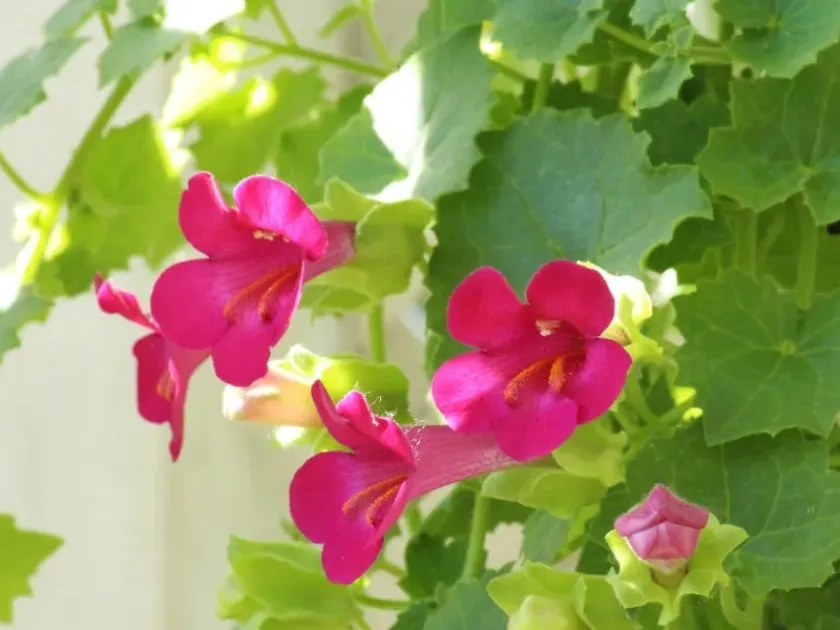
Description
Sowing dates
Seeds of Lophospermum scandens should be sown indoors in late February or March. Given the species' long growing cycle, starting early is essential to ensure blooming during the peak summer months.
Use a well-draining, lightweight potting mix and surface-sow the seeds, covering them very lightly. Maintain a steady temperature between 20–22 degrees Celsius to facilitate successful germination.
Cover the seed trays with clear plastic or glass to maintain humidity levels. Ensure daily ventilation to prevent damping-off, a common fungal issue that affects young seedlings in humid conditions.
Once the second pair of true leaves appears, carefully prick out the seedlings into individual containers. Avoid disturbing the root system too much, as it is relatively delicate at this stage.
Transplant the seedlings to their permanent outdoor location only after the threat of frost has completely passed. Acclimatize the plants gradually over a week to reduce transplant shock.
Growing requirements
Lophospermum scandens is a vigorous climbing plant belonging to the Plantaginaceae family. It thrives in full sun but prefers locations protected from harsh, drying winds that can damage its foliage.
The plant requires fertile, loamy, and well-draining soil. It does not tolerate waterlogged conditions, which can lead to quick root degradation and death of the plant in a matter of days.
Consistent moisture is vital throughout the growing season. While the soil should be kept damp, it should never be saturated. Mulching the base of the plant can help retain moisture during hot spells.
Providing sturdy support is essential. Lophospermum scandens produces tendrils that easily grasp trellises, fences, or netting, allowing the plant to reach heights of up to 3 meters in a single season.
Regular fertilization with a balanced, slow-release or liquid fertilizer is recommended every two weeks. High-phosphorus formulations will encourage more robust and prolific flowering throughout the summer.
Main diseases and pests
Aphids are the most frequent pests associated with this plant. They tend to congregate on the tender tips of new growth, so routine inspection and application of insecticidal soaps are necessary.
Spider mites can become a problem in hot, arid weather conditions. Increasing the ambient humidity around the foliage and ensuring proper hydration helps prevent mite infestations from taking hold.
Powdery mildew may occur if the plant is grown in areas with poor air circulation or high humidity. Pruning crowded foliage helps improve airflow and reduces the risk of fungal infections.
Root rot is often the result of poor drainage or overwatering. If the stems appear mushy or the leaves suddenly wilt despite wet soil, drainage should be corrected immediately to save the plant.
Good garden hygiene, such as removing fallen debris and keeping the surrounding area free of weeds, helps create a healthier environment and minimizes the habitat for common garden pests.