
Sweet alyssum
Lobularia maritima (L.) Desv.
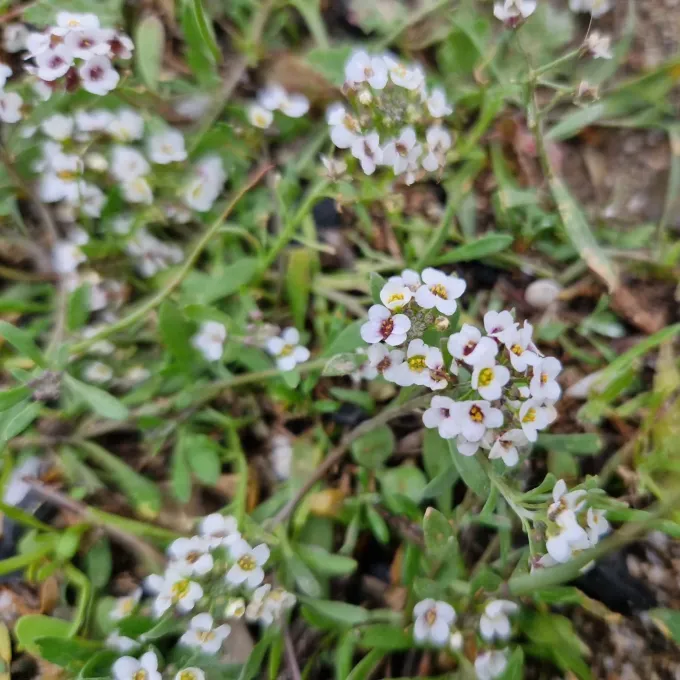
Description
Sowing dates
Sweet alyssum (Lobularia maritima) belongs to the Brassicaceae family. In temperate climates, seeds are sown directly into open ground in April or May, once the risk of spring frosts has passed.
For early flowering, the crop is grown using the transplant method. Seeds are sown indoors in March in a light substrate, surface-sowing them as they require light for germination.
The optimal temperature for seed germination is between +15°C and +18°C. Seedlings emerge uniformly within 7–10 days, after which the temperature should be lowered to prevent legginess.
Seedlings are pricked out into individual pots or trays when the first two true leaves appear. The plant transplants well if the root ball remains intact during the process.
Transplanting into the permanent location is carried out with a spacing of 15–25 cm between plants, depending on the variety, to ensure good airflow and root system development.
Growing requirements
The crop prefers open, sunny locations with light, well-drained soils. Alyssum is highly drought-tolerant, although it requires moderate watering during prolonged dry spells.
In heavy clay soils, the plant does not perform well; therefore, it is recommended to add sand and organic matter to improve soil structure and permeability before planting.
The optimal pH level for successful cultivation ranges from slightly acidic to neutral. High calcium content in the soil is beneficial for the plant's decorative appeal and blooming performance.
The plant is frost-hardy and can withstand light, short-term frosts, allowing it to be used effectively as a ground cover plant across various climatic zones.
During the growing season, alyssum responds well to complex mineral fertilizers, but excessive nitrogen can lead to lush vegetative growth at the expense of flower production.
Yield
The agricultural use of sweet alyssum is primarily for landscaping, borders, and container arrangements. It is prized for its long, almost continuous blooming from early summer until late autumn.
This crop is a valuable honey plant with a pleasant sweet fragrance, attracting a high number of pollinators to the garden, which supports overall garden biodiversity.
In commercial floriculture, alyssum is valued for its low maintenance requirements and fast growth rate, enabling the quick establishment of dense floral carpets over large areas.
To maintain its aesthetic appeal and stimulate a second wave of blooms, regular trimming of the plants by 5–10 cm after the first bloom cycle is highly recommended.
Seed production is high; under favorable conditions, the plant is capable of self-seeding, which helps maintain the population on the plot over several years.
Main diseases and pests
The primary threat to the crop is downy mildew, which occurs during periods of stagnant moisture and poor ventilation. Prevention involves maintaining proper spacing and avoiding overwatering.
Among pests, the crucifer flea beetle causes the most damage, especially during hot and dry weather. Control measures include the use of insecticides or biological sprays.
Aphid infestations may also occur, as they feed on the sap of young shoots and blossoms. Regular inspections help identify infestations early for prompt treatment.
Root rot may develop if grown in areas with poor drainage or high groundwater levels. Affected plants wilt quickly and should be removed from the site to prevent spread.
- Practice crop rotation.
- Ensure adequate soil aeration.
- Control weeds regularly.