
Lilaeopsis minor
Lilaeopsis minor
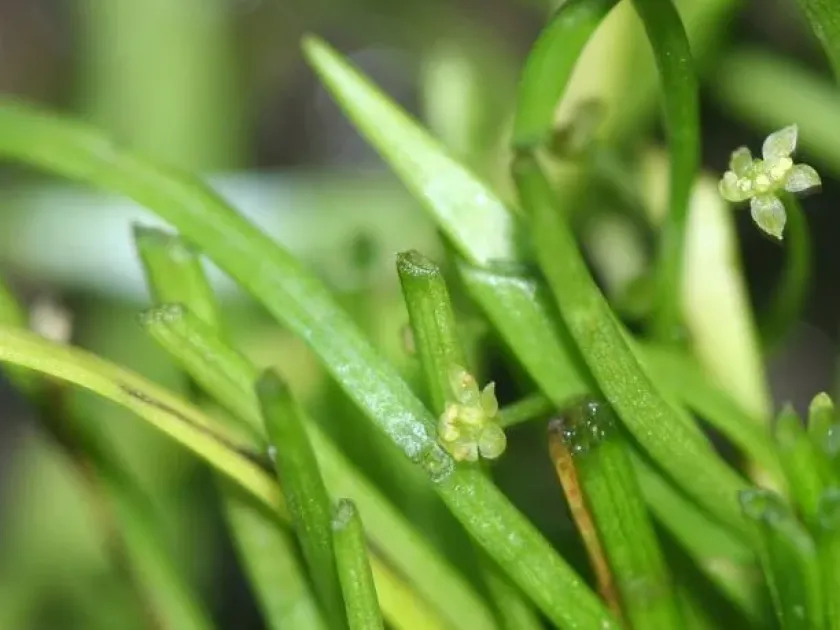
Description
Growing requirements
Lilaeopsis minor is a distinctive aquatic plant belonging to the Apiaceae family. It is widely recognized in the aquarium industry for its ability to create a dense, grass-like carpet, providing a naturalistic look to freshwater layouts.
The plant originates from South America and parts of Australia, typically found in marshy or shallow water environments. This evolutionary background allows the species to tolerate a wide range of moisture levels and substrate conditions.
Botanically, it is a rhizomatous plant that spreads horizontally via runners. The leaves, known as spatulate or linear blades, rise vertically from the nodes of the creeping stem, creating a low-profile meadow effect once established.
Cultivation requirements for Lilaeopsis minor are primarily centered on light availability. It demands high-intensity lighting to remain compact; in low-light environments, the plant exhibits elongated growth, losing its desirable carpeting characteristics.
Optimal growth is achieved in nutrient-rich substrates with a regular carbon dioxide injection. Maintaining a temperature range between 20°C and 26°C and ensuring clean, filtered water are critical factors for long-term health and propagation success.
Main diseases and pests
The most significant threat to a healthy stand is the invasion of filamentous algae. Since this plant has a relatively slow growth rate initially, it is highly susceptible to being smothered by algae if nutrient levels and water circulation are not strictly balanced.
Pests such as invasive snail populations can also pose a risk by grazing on the tender new leaf growth. Maintaining proper ecosystem management and introducing effective cleaning species often helps prevent significant damage to the plant colonies.