
Leptadenia pyrotechnica
Leptadenia pyrotechnica
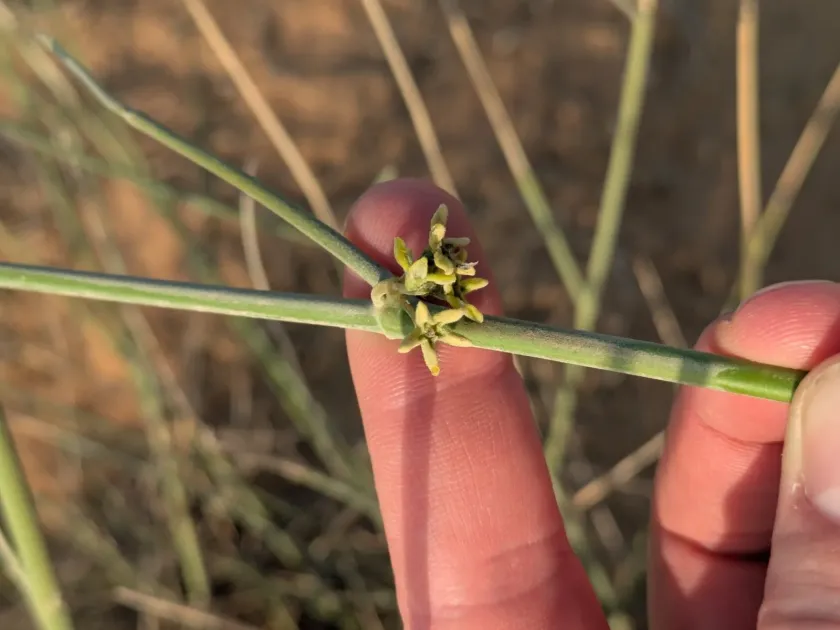
Description
Sowing dates
Leptadenia pyrotechnica is a typical desert-adapted species, and its natural regeneration or cultivation timing is usually aligned with the onset of the rainy season. In agricultural settings, seeds are sown into well-prepared, loose, and well-drained soil once temperatures consistently exceed 25 degrees Celsius.
High solar intensity is required for optimal germination. Seeds are sown at a depth of 1–2 centimeters, as small seeds have limited energy reserves. Providing adequate contact between the seed and moist substrate immediately after sowing is essential to trigger the imbibition process.
In large-scale operations, both direct seeding and the use of container-grown seedlings are practiced. The transplanting method significantly improves establishment rates in the harsh conditions of desert environments by minimizing losses caused by desiccation of the topsoil layer.
Managing planting density is a critical agronomic practice, depending on the intended use. For fiber production, spacing between rows is increased to allow full stem development, while denser configurations are used for soil stabilization and sand dune fixation purposes.
Once seedlings emerge, the crop requires minimal weed control, as Leptadenia is a vigorous grower that quickly colonizes available space, suppressing competitors. The period from sowing to the establishment of the root system is critical for building resilience against subsequent drought events.
Growing requirements
Belonging to the Apocynaceae family, this plant is a classic xerophyte, perfectly adapted to extreme heat and water scarcity. Leptadenia thrives in loose, sandy, and loamy soils that possess excellent aeration and allow deep water percolation to the roots.
The plant exhibits exceptional tolerance to saline soils and the high temperatures typical of tropical and subtropical deserts in Africa and Southern Asia. It does not tolerate prolonged waterlogging or poor drainage, which can lead to the development of root rots.
Optimal climatic conditions for growth include a long frost-free period and high solar exposure. Even with minimal annual rainfall ranging from 100 to 300 mm, the crop maintains active growth due to its powerful, deep-reaching taproot system.
During development, Leptadenia does not require significant mineral fertilization, as it is well-adapted to nutrient-poor soils. However, small amounts of organic matter during initial growth stages help accelerate biomass production, which is essential for industrial utility.
Maintenance involves periodic inter-row cultivation to break the soil crust, facilitating better penetration of atmospheric moisture. The plant is capable of surviving extended periods of extreme drought by entering a state of limited metabolic activity.
Yield
The yield of Leptadenia is measured primarily by the volume of green biomass produced for livestock fodder and the output of high-quality vegetable fiber. In natural habitats, productivity is heavily dependent on rainfall patterns and the accessibility of groundwater.
With systematic management and selective harvesting, the yield of green biomass can be significantly increased compared to wild populations. The optimal time for harvesting biomass is during the active stem growth phase, before lignification and the accumulation of excessive secondary metabolites.
The fiber derived from Leptadenia stems is valued for its strength and rot resistance. The fiber content represents a significant portion of the total dry stem mass, making it a promising raw material for local cottage industries in regions with limited textile infrastructure.
Seeds are a secondary product, used for propagation or as technical raw materials. Harvesting is performed manually after the follicle-like fruits mature, which contain seeds equipped with coma hairs for wind dispersal.
Overall plantation productivity remains stable for many years due to the perennial life cycle of the plant. Regular pruning stimulates branching and the formation of new shoots, ensuring a consistent annual biomass increment.
Main diseases and pests
Leptadenia pyrotechnica is characterized by high resistance to most agricultural pathogens due to the presence of specific alkaloids in its tissues. This makes it largely invulnerable to many types of insect pests that avoid feeding on its stems.
The main threat under high-humidity conditions is fungal pathogens that cause wilting or decay of the root collar. Such damage typically occurs when drainage is inadequate or when over-irrigation is applied, which is atypical for this species' natural habitat.
While some beetles may occasionally damage young shoots and leaves, they rarely reach economic damage thresholds in natural ecosystems. The plant possesses strong chemical defenses, including a bitter-tasting latex that deters herbivores.
Biotic factors rarely lead to crop failure, as Leptadenia is an integral component of desert phytocenoses. The primary "enemies" of the crop are abiotic factors, such as strong dust storms that can mechanically damage young plantations.
To prevent the spread of localized disease, crop rotation and the prompt removal of affected specimens are recommended. The use of fungicides is rarely necessary and economically unjustified, given the low-input nature of cultivating this species.
Harvesting
Harvesting is conducted primarily via mechanical or manual methods, depending on the scale of the farm. When harvested for fiber, stems are cut at the base, bundled, and undergo a retting process to extract the bark containing the valuable fibers.
Green biomass harvesting is performed by mowing or pruning young side shoots. It is crucial to harvest when the nutritional value is high but the structural composition remains soft enough for animal digestion.
After cutting, the plant regrows rapidly due to its developed root system, allowing for several harvests per season if adequate moisture is available. This ensures a consistent supply of raw material for several consecutive years.
When collecting seeds, it is important to prevent follicle rupture, as the seeds are equipped with fluffy hairs that allow them to fly away. Harvest is carried out at the wax maturity stage when the follicles begin to change from green to brown.
Post-harvest processing includes drying raw materials in direct sunlight, which facilitates disinfection and prevents mold. Properly dried fiber and biomass can be stored for extended periods without loss of quality.