
Ledebouria revoluta
Ledebouria revoluta
Description
Growing requirements
Ledebouria revoluta is a bulbous perennial plant belonging to the Asparagaceae family. Native to the arid regions of Southern Africa, this species has adapted to survive in harsh, moisture-deficient environments by storing water in its bulbous structures.
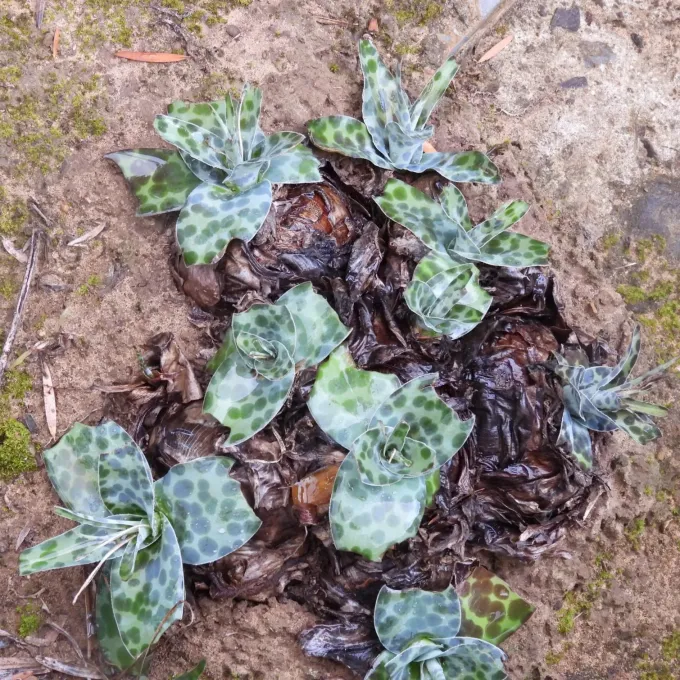
The plant is characterized by its distinctively mottled or spotted leaves, which often feature a purplish hue on the underside. It produces small, bell-shaped flowers on stalks, emerging from the center of the bulb cluster during the active growing season.
Successful cultivation depends on replicating the plant's natural habitat conditions, specifically through excellent soil drainage. A gritty, well-draining substrate composed of sand, pumice, and loam is essential to prevent the accumulation of excess moisture.
Light requirements for this species are high, though direct, scorching sunlight should be avoided during the peak hours of the day. Bright, indirect light is ideal for maintaining the plant's unique foliage patterns and ensuring steady, healthy growth.
Agricultural management requires a strictly seasonal approach. During the active growth period, the plant benefits from regular watering once the substrate is partially dry, while the winter dormancy period necessitates cool temperatures and significantly reduced irrigation.
Main diseases and pests
Mealybugs and spider mites are the most common pests that affect Ledebouria revoluta, typically thriving in conditions of poor air circulation and low humidity. Early detection and the application of appropriate contact insecticides are critical for plant health.
Root and bulb rot are the primary threats to this species, usually caused by overwatering or poor drainage. To prevent these infections, it is vital to ensure that the potting medium remains loose and that the pot has adequate drainage holes.