
Landolphia kirkii
Landolphia kirkii
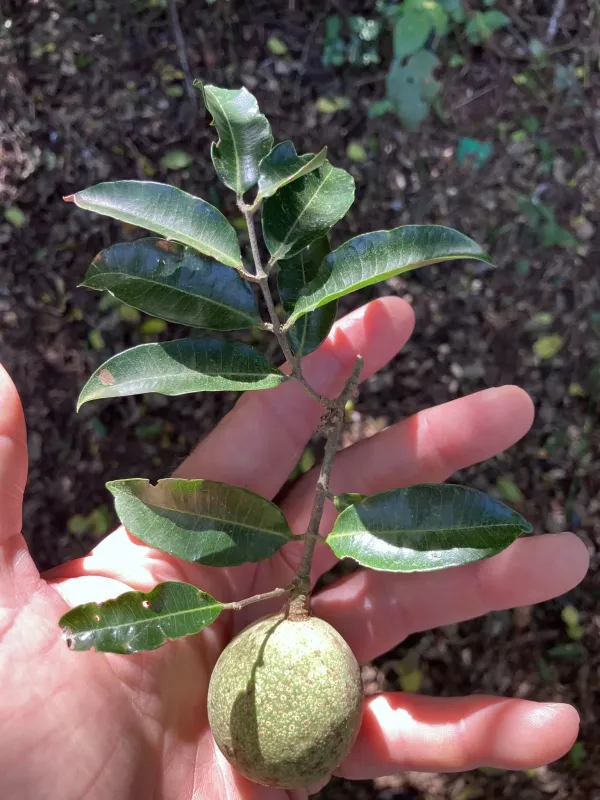
Description
Growing requirements
Landolphia kirkii is a robust woody vine belonging to the Apocynaceae family. Native to the coastal and riverine regions of East Africa, this plant is well-known for its ability to climb tall trees, reaching significant heights in tropical rainforest ecosystems.
The plant thrives in humid tropical environments. It requires a stable climate with high annual rainfall to maintain its vigorous growth. Areas with extreme drought are unsuitable unless advanced irrigation infrastructure is implemented to maintain constant soil moisture levels.
Ideal soil conditions consist of deep, fertile, and well-drained loamy soils. Good drainage is essential for the health of the root system, as Landolphia kirkii is susceptible to root rot if waterlogged conditions persist over prolonged periods.
The plant exhibits high adaptability to varied light conditions, but it generally prefers the diffuse light typical of the forest understory during its early stages, eventually growing into the canopy to access more direct sunlight as it matures.
Biological features include specialized laticifer cells that produce a rich, high-quality latex. This natural rubber resource is distributed throughout the stem and bark, making the vine a historically significant source of rubber in several African nations.
Harvesting
The extraction of latex is carried out by making controlled incisions in the vine's stems. Due to the rapid coagulation of the sap, experienced harvesters use specific techniques to collect the substance effectively before it hardens on the surface of the bark.
Beyond rubber production, Landolphia kirkii produces edible fruits characterized by a rounded shape and a sweet-tart, refreshing pulp. These fruits are locally prized and contribute to the nutritional security of communities within its native range.
Propagation is primarily achieved via fresh seeds. Since the seeds lose viability quickly after drying, they are sown immediately after being extracted from the ripe fruit in specialized nursery beds to ensure high germination rates.
Maintenance of the crop involves the installation of robust support structures to encourage vertical growth. Managing the vines on supports is crucial for maximizing biomass production and ensuring that the stems are accessible for future harvesting cycles.
Sustainable harvesting practices are essential to preserve wild populations. Modern agroforestry models advocate for the periodic rotation of harvest sites to allow plants sufficient time for vegetative recovery and latex synthesis after the tapping process.