
Hairy Landolphia
Landolphia hirsuta
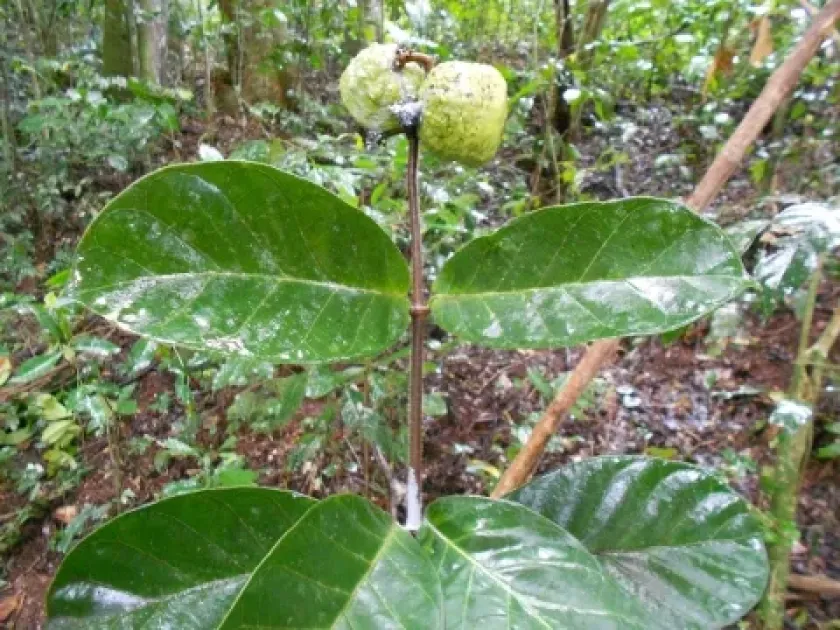
Description
Growing requirements
Hairy Landolphia (Landolphia hirsuta) is a perennial woody climber belonging to the Apocynaceae family. Native to tropical Africa, this species thrives in forest fringes and savanna areas where warmth and humidity are abundant throughout the year.
The plant demands a strictly tropical climate with temperatures rarely dropping below 15°C. Exposure to frost is fatal, so commercial cultivation is restricted to tropical and subtropical zones where thermal stability is guaranteed across all seasons.
Regarding soil, Landolphia hirsuta prefers well-aerated, deep, and fertile loamy soils. Excellent drainage is non-negotiable; while the plant enjoys moisture, it cannot tolerate waterlogging, which rapidly compromises the root system integrity.
Agricultural management requires the installation of sturdy support systems. As a climber, it needs trellises or standing trees to reach its full vegetative potential. This structure ensures that light penetrates the canopy, which is vital for fruit development.
Soil management should involve organic mulching to maintain soil moisture levels and suppress weeds during the initial establishment phase. Regular pruning is necessary to control the vigor of the vines and encourage a more productive flowering and fruiting cycle.
Yield
This crop is recognized for two primary commodities: its edible fruits and its latex. The latex harvested from the stems is of high quality, historically used as a source of natural rubber, while the fruits offer a unique sweet and tangy flavor profile.
Productivity peaks as the plant reaches maturity, typically starting in the fourth year of growth. The fruit yield is maximized through balanced fertilization, focusing on potassium and phosphorus inputs during the flowering stage to support heavy fruit sets.
Harvesting fruits requires manual labor, as the berries mature in clusters. It is essential to perform multiple passes through the plantation, collecting only fully ripe fruits to ensure the best sugar content and market quality for consumers.
Latex collection follows traditional tapping methods applied to the woody stems. The timing of tapping must be managed carefully to avoid exhausting the plant’s energy reserves, allowing sufficient time for the vine to recover between harvest cycles.
The economic viability of Hairy Landolphia is enhanced by its multi-purpose utility. By integrating fruit harvesting with periodic latex extraction, farmers can achieve better land-use efficiency and hedge against fluctuations in market demand for agricultural products.
Main diseases and pests
Fungal pathogens represent the most significant threat, particularly in high-humidity environments. Leaf spot diseases can spread rapidly if the air circulation within the canopy is poor, necessitating regular canopy thinning and sanitation.
Pest pressure is frequently dominated by sap-sucking insects like mealybugs and scale insects. These pests settle on stems and leaf undersides, drawing essential nutrients and facilitating the growth of sooty mold, which impairs photosynthesis.
Root-knot nematodes can pose a severe problem in lighter, sandy soils. They cause the formation of galls on the roots, which restricts the uptake of water and nutrients, eventually leading to a noticeable decline in the plant's overall health and growth rate.
Wood-boring beetles can inflict structural damage on the main stems, potentially causing the vine to break under its own weight. Regular inspection of the woody bark is necessary to detect early signs of larval entry holes.
Integrated Pest Management (IPM) is the recommended approach for this crop. By maintaining healthy soil conditions, promoting natural predators, and using targeted organic sprays, producers can manage threats without relying excessively on synthetic chemicals.