
Landolphia heudelotii
Landolphia heudelotii
Description
Growing requirements
Landolphia heudelotii is a perennial woody climber belonging to the Apocynaceae family. It is widely recognized for its ability to climb tall trees in its native African habitat, forming dense networks of vines.
The plant originates from the tropical forests and savannah regions of Africa. It thrives in hot, humid climates and is highly adapted to the specific ecological conditions of the continent's tropical belt.
Optimal growth requires well-drained, nutrient-rich soils. The plant prefers areas with consistent moisture, though it shows resilience in varied soil types provided the root system remains healthy.
Botanically, the plant is characterized by its latex-producing stems. The leaves are opposite, leathery, and dark green, contributing to its robust appearance in the tropical understory.
Agricultural practices should prioritize providing sturdy supports for the vines to ensure proper vertical development and facilitate the harvesting of both latex and fruits.
Yield
Historically, Landolphia heudelotii has been a significant source of natural rubber. The milky latex harvested from the vine's bark was once a key resource for regional trade.
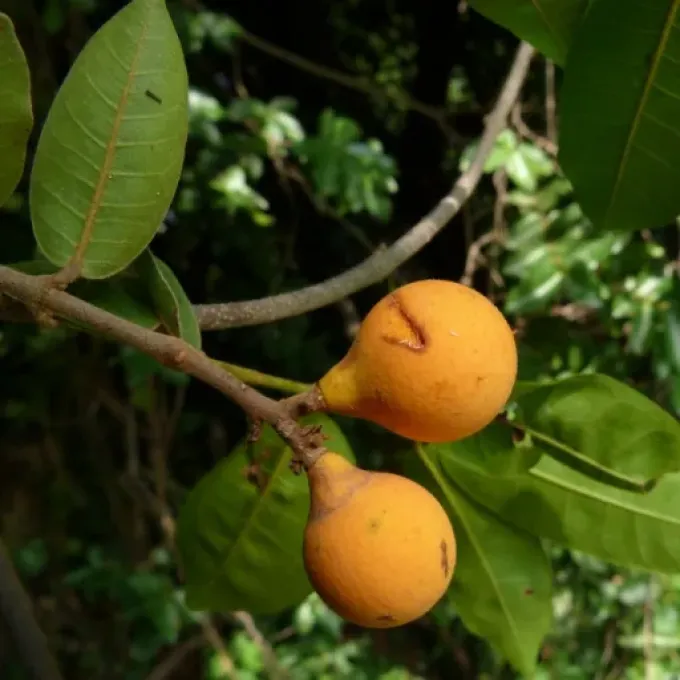
Beyond rubber production, the plant is valued for its edible fruits. These fruits are large, spherical, and possess a tangy pulp that is popular in local markets and culinary traditions.
The yield of fruits and latex is influenced by the plant's age and the density of the vine cultivation. Sustainable management ensures that the plant continues to produce over many years.
The culinary use of the fruits includes fresh consumption and the preparation of juices and jams, making it a valuable crop for subsistence and small-scale commercial farming.
Additionally, the plant finds uses in traditional medicine, where various parts of the vine are processed for their therapeutic properties, further increasing its economic and cultural relevance.
Main diseases and pests
The primary threats to the health of Landolphia heudelotii include fungal pathogens that flourish in high-humidity environments where airflow is restricted.
Pests such as mealybugs and aphids frequently target the young, tender growth, potentially reducing the plant's vigor and its ability to synthesize latex.
Preventive maintenance involves regular pruning to improve air circulation and sunlight exposure, which is critical for reducing the prevalence of pests and fungal infections.
Root rot remains a critical concern if the soil does not allow for efficient drainage, particularly during periods of intense rainfall typical in tropical regions.
Integrated pest management strategies focusing on biological control are recommended to maintain the quality of the fruits and ensure safe agricultural production.