
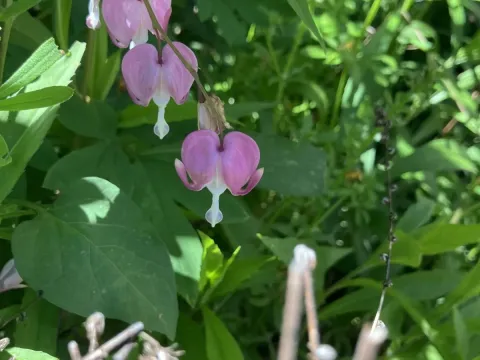
Bleeding heart
Lamprocapnos Endl.
The bleeding heart (Lamprocapnos spectabilis) is a herbaceous perennial plant belonging to the Papaveraceae family. Originally native to Siberia, northern China, Japan, and Korea, it is widely prized for its unique heart-shaped flowers.
What the section contains

Bleeding heart
This crop thrives in rich, moisture-retentive, and well-drained soils. For optimal development, the soil should be amended with organic matter such as compost or leaf mold, which mimics its natural forest-floor habitat.
Bleeding hearts prefer partial shade, particularly in climates with hot summers. Exposure to intense afternoon sun can cause the foliage to wither prematurely and force the plant into an early dormancy.
The plant requires consistent moisture, especially during the spring bloom period. However, gardeners must avoid waterlogged conditions, as the fleshy roots are highly susceptible to rot if soil drainage is insufficient.
Annual maintenance involves applying a balanced fertilizer in the early spring and adding a layer of mulch in the fall to protect the root system from freezing temperatures and frost heaves.
Aphids are the most common pests that infest the tender new growth of the bleeding heart. Regular inspections in early spring are necessary, and infestations should be treated with insecticidal soaps or systemic pesticides.
Botrytis blight, or grey mold, is a frequent threat during cool, damp spring weather. Ensuring adequate spacing between plants is the best preventative measure to promote airflow and reduce humidity around the foliage.
Root rot is often caused by poor drainage or overwatering. If the plant shows signs of sudden wilting or yellowing, the soil moisture levels must be checked and the irrigation schedule adjusted immediately.
Slugs and snails can cause significant aesthetic damage to the leaves during the early vegetative phase. Using organic barriers or bait traps is an effective way to manage these mollusks in the garden.
Viral infections can occasionally affect the plant, manifesting as stunted growth or leaf spotting. Since these diseases are incurable, infected plants should be promptly removed and destroyed to prevent spreading to other specimens.