
Lallemantia canescens
Lallemantia canescens (L.) Fisch. & C. A. Mey.
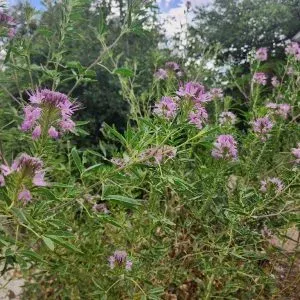
Description
Sowing dates
Lallemantia canescens is a spring crop, therefore sowing is conducted in early spring, as soon as the soil warms up to 5–7 degrees Celsius.
The optimal sowing period coincides with the start of field work for cereal crops, which allows the plant to efficiently utilize spring moisture reserves.
The seeding rate is calculated based on the target plant density, which is usually around 300–400 plants per square meter.
The sowing method is row-based with spacing of 15–20 centimeters, ensuring sufficient space for root system development.
A critical requirement is the sowing depth: it should be 2–3 centimeters to ensure uniform and complete germination.
Growing requirements
The crop belongs to the Lamiaceae family and is characterized by high drought tolerance, making it promising for steppe and forest-steppe zones.
The plant is light-demanding and does not tolerate shading well; therefore, fields must be open and well-lit throughout the day.
Soil requirements are moderate, but the plant performs best on light chernozems and chestnut soils with a neutral pH level.
It possesses a well-developed root system capable of extracting moisture from deep soil layers, reducing the need for irrigation in moderate rainfall regions.
The optimal temperature for growth is 20–25 degrees, and the plant can withstand short-term frosts during the early growth stages.
Yield
The yield of Lallemantia canescens seeds depends on the level of agricultural technology and the climatic conditions of the specific season.
Under favorable conditions, the average seed yield can range from 8 to 15 centners per hectare, provided optimal planting density is maintained.
The oil content in these seeds is high, reaching 35–40 percent, which makes it a valuable raw material for various industries.
The oil is categorized as a drying oil, similar in its chemical properties to linseed oil, which drives demand in the paint and varnish industry.
In addition to seeds, the plant produces biomass that can be processed and used as an additional source of organic matter to improve soil fertility.
Main diseases and pests
The primary threats to crops are leaf-eating pests, such as weevils, which can cause significant damage to young seedlings in spring.
During the flowering period, aphids can pose a danger, potentially reducing pollination intensity and overall productivity.
Fungal diseases are most often manifested in cases of excessive soil moisture or violations of crop rotation rules, which promote root rot.
Weeds are serious competitors during the first half of the vegetation period, making timely harrowing or herbicide application essential.
Disease prevention relies on strict crop rotation, ensuring the plant is not returned to the same field sooner than after 3–4 years.
Harvesting
Harvesting of Lallemantia canescens begins when the seeds on most plants have ripened and achieved their characteristic coloration.
A sign of readiness for harvest is the yellowing or browning of the vegetative mass and slight seed shedding upon mechanical contact.
A two-stage harvesting method or direct combining is used, depending on the uniformity of ripening across the field.
To minimize losses during direct combining, it is vital to adjust the threshing drum speed to avoid seed damage.
After collection, the seeds require thorough cleaning and drying to standard moisture levels, ensuring long-term storage without quality loss.