
Night-blooming cestrum
Cestrum nocturnum L.
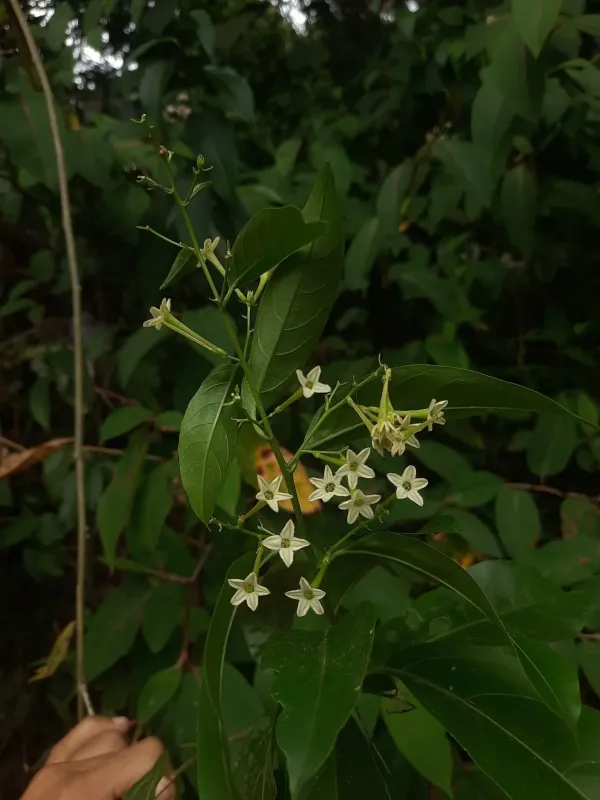
Description
Growing requirements
Night-blooming cestrum (Cestrum nocturnum L.) is a member of the Solanaceae family. This evergreen shrub is highly valued for its intense, sweet-scented flowers that bloom and release fragrance predominantly at night.
Native to tropical regions of the Americas and the West Indies, the plant thrives in warm, humid environments. It typically grows in tropical forests and along forest edges where it receives adequate sunlight.
The plant requires a frost-free climate to thrive. It is highly sensitive to cold, so in temperate climates, it is grown primarily as a container plant that must be moved indoors during colder seasons.
Soil requirements include a rich, well-draining organic medium. A slightly acidic to neutral pH level is ideal for the proper absorption of nutrients required for rapid vegetative growth.
In landscaping, it serves as an aromatic feature plant. Its primary utility is decorative, often used in patio settings or conservatories to provide sensory appeal during the evening hours.
Main diseases and pests
Common pests affecting Cestrum nocturnum include aphids, spider mites, and whiteflies. These pests thrive in dry or poorly ventilated indoor conditions, requiring constant monitoring.
Root rot is the most common disease, resulting from overwatering or poorly drained containers. Proper drainage is essential to prevent the accumulation of excess water around the root system.
Powdery mildew may occur if the plant is kept in conditions with high humidity and stagnant air. Enhancing airflow and reducing humidity levels can help manage fungal outbreaks effectively.
It is important to note that the plant contains alkaloids and is considered toxic if ingested by humans or pets. Always handle the plant with care and keep it away from domestic animals.
Sanitation practices, such as removing fallen leaves and pruning dead or diseased wood, significantly reduce the habitat for pests and prevent the onset of various fungal infections.