
Green poison berry
Cestrum parqui L'Hér.
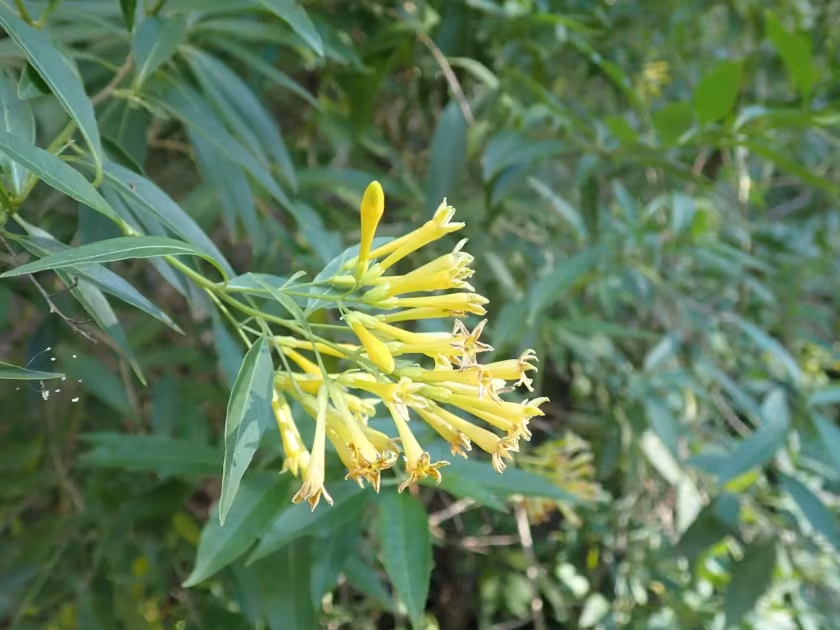
Description
Growing requirements
Cestrum parqui, commonly known as green poison berry, is a perennial shrub belonging to the Solanaceae family, native to temperate regions of South America.
The plant thrives in full sun exposure, which is essential for stimulating the development of its fragrant yellow-green flowers and subsequent black berries.
Soil requirements for optimal growth involve well-drained, fertile soil, though the shrub shows significant adaptability to various soil types, including rocky or disturbed ground.
Water management is crucial during the establishment phase, as the plant prefers consistent moisture but must be protected from prolonged soil saturation to prevent root decay.
Regarding climate, Cestrum parqui exhibits moderate cold tolerance, with its top growth often dying back in hard frosts, followed by vigorous regrowth from the rootstock in spring.
Main diseases and pests
The primary concern associated with this species is its high toxicity to livestock, as all plant tissues contain alkaloids and saponins that cause severe physiological damage.
In agricultural settings, particularly in pasture management, it is classified as a significant weed that must be actively controlled to prevent accidental ingestion by grazing animals.
The plant is remarkably resistant to typical pests, as its chemical composition acts as a natural deterrent against most insects, aphids, and foliar diseases.
In humid or stagnant environments, root pathogens can become an issue, emphasizing the importance of site selection and proper spacing to ensure adequate air circulation.
Eradication strategies often involve mechanical grubbing of the root system or the careful application of targeted herbicides to prevent the spread of this opportunistic shrub.