
Orange cestrum
Cestrum aurantiacum Lindl.
Description
Growing requirements
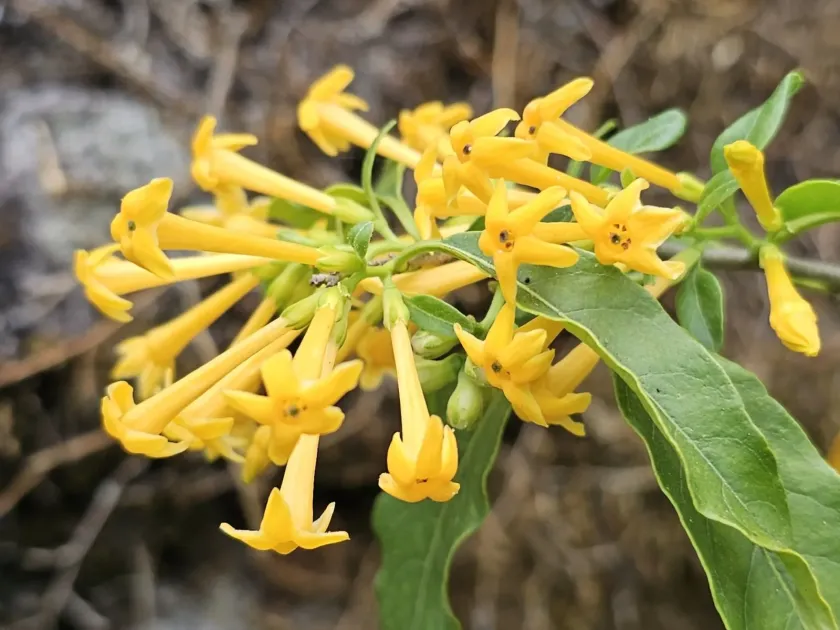
Orange cestrum (Cestrum aurantiacum) is a vigorous evergreen shrub belonging to the Solanaceae family. Originating from the highland forests of Guatemala and other parts of Central America, this plant is valued for its vibrant, tube-shaped flowers.
The plant thrives in bright, indirect light. While it can tolerate some morning sun, protecting it from intense midday heat is essential to prevent leaf scorching and to maintain the health of the foliage in container-grown specimens.
Regarding climate, it is a frost-tender species that requires consistent temperatures between 18°C and 25°C during the growing season. In colder climates, it must be overwintered in a greenhouse or indoors to prevent tissue damage.
The soil requirements are strict: the medium must be well-draining, fertile, and slightly acidic. A mix containing peat, perlite, and organic compost is ideal for providing the necessary nutrients and ensuring roots do not remain waterlogged.
Economically and horticulturally, Cestrum aurantiacum is primarily grown for its ornamental value. Its clusters of orange-yellow, aromatic blossoms make it a favorite for conservatories and as a specimen plant in temperate regions where it can be moved indoors during winter.
Main diseases and pests
The most common pests affecting this shrub are spider mites, which flourish in warm, dry environments. These pests can cause significant damage by piercing leaf tissue, leading to yellowing and premature leaf drop if not addressed.
Whiteflies and aphids are also frequent visitors to Orange cestrum. These insects gather on the undersides of leaves and on the tips of new growth, weakening the plant by extracting sap and potentially spreading viral infections.
Fungal issues such as root rot are the primary cause of mortality in this species. This often occurs due to overwatering or poor drainage, which creates an anaerobic environment that fosters the growth of harmful soil-borne pathogens.
To maintain plant health, it is recommended to apply preventive measures like regular pruning to ensure proper airflow through the canopy. If pests are detected, biological controls or insecticidal soaps can be used to manage infestations effectively.
Gardeners should exercise caution, as all parts of the plant are considered toxic to humans and pets if ingested. Protective equipment should be worn when pruning to avoid skin irritation from contact with sap.