
Cestrum corymbosum
Cestrum corymbosum Schltdl.
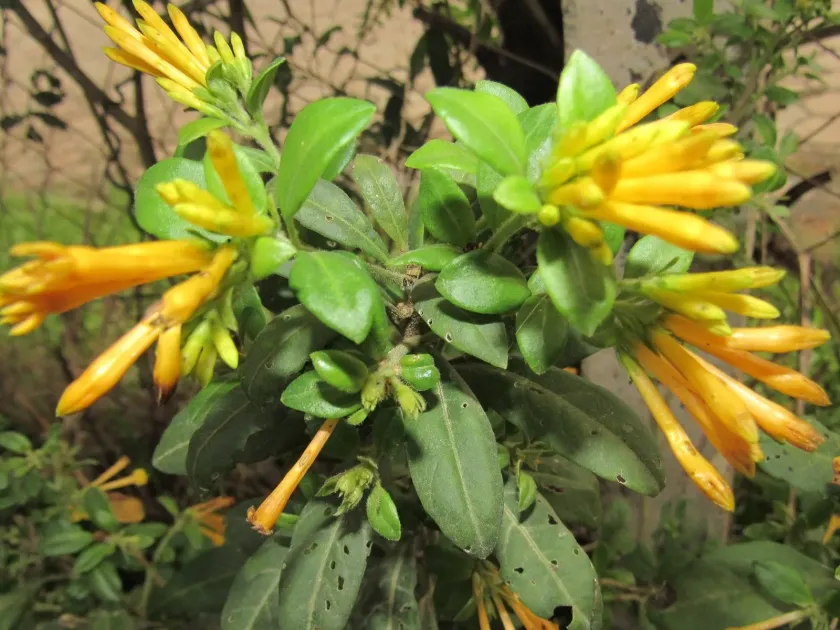
Description
Growing requirements
Cestrum corymbosum is an evergreen shrub belonging to the Solanaceae family, naturally occurring in the mountainous regions of South America. This species is highly valued for its dense foliage and unique tubular flower clusters that appear in characteristic corymbs.
Botanically, the plant features alternate leaves and terminal inflorescences that often bloom in vibrant shades of red and orange. As a tropical plant, it thrives in environments that mimic its native habitat, requiring high humidity and consistent warmth throughout the year.
Climatic requirements demand an frost-free environment, as the plant cannot withstand freezing temperatures. In temperate climates, it is typically managed as a greenhouse crop or a conservatory plant, requiring protection during winter months to maintain its vigor.
Soil conditions are critical for the health of Cestrum corymbosum; it prefers well-drained, nutrient-rich, and slightly acidic soil. Over-compaction of the soil can lead to root suffocation, which is why incorporating organic matter or perlite into the planting mix is highly recommended.
Its primary use is ornamental, serving as a focal point in tropical landscapes or as a sophisticated addition to botanical collections. The plant requires regular pruning to maintain its shape and promote denser flowering cycles throughout the peak growth season.
Main diseases and pests
Common pests include greenhouse whiteflies and spider mites, which can quickly colonize the undersides of leaves in dry, warm air conditions. Regular monitoring and maintaining proper humidity levels are effective strategies to prevent significant infestations.
The plant is susceptible to various fungal pathogens, such as powdery mildew, especially if airflow is restricted. Implementing proper spacing between plants and avoiding overhead irrigation can significantly reduce the risk of disease outbreaks.