
Primrose jasmine
Jasminum mesnyi
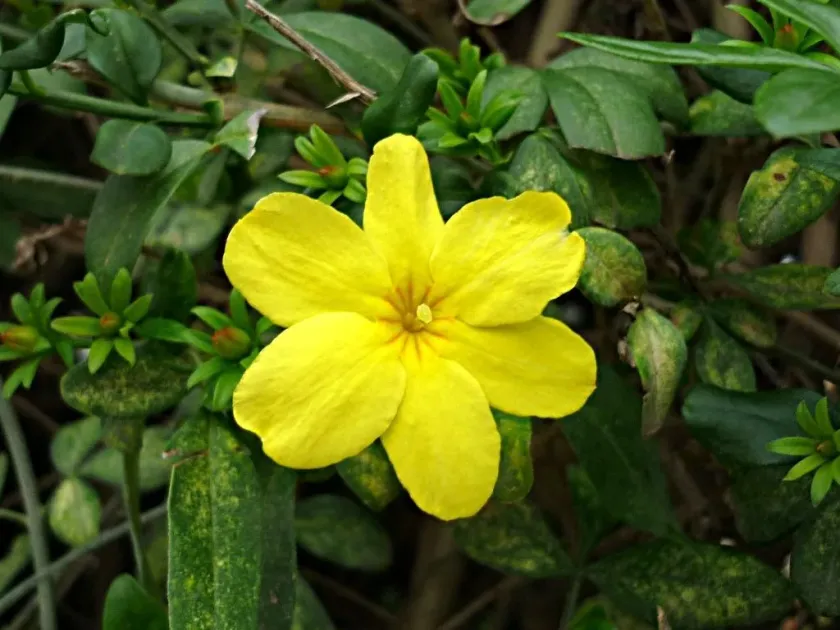
Description
Growing requirements
Primrose jasmine (Jasminum mesnyi) is an evergreen or semi-evergreen shrub belonging to the Oleaceae family. Originating from China, it is widely recognized for its arching stems and large, bright yellow flowers that bloom in early spring.
Botanically, it is classified as a sprawling shrub that can reach heights of up to 3 meters. Its compound leaves provide a dense evergreen foliage, making it a popular choice for wall-training or as an ornamental hedge in temperate and subtropical landscapes.
The plant thrives in full sun to partial shade. While it prefers warm climates, it can tolerate light frosts, but in regions with harsh winters, it requires significant protection or must be grown in containers that can be moved indoors.
Soil requirements focus on fertility and drainage. The plant prefers well-drained, humus-rich soil with a slightly acidic to neutral pH. It is crucial to ensure that the site does not accumulate stagnant water, as the roots are prone to decay under waterlogged conditions.
Agronomic management involves structural pruning performed immediately after the flowering season. This practice encourages the development of new flowering wood for the following year and maintains the aesthetic appeal of the plant's cascading growth habit.
Main diseases and pests
The most common pests affecting Jasminum mesnyi include aphids and spider mites, particularly in hot and dry climates. Integrated pest management, including the use of neem oil or insecticidal soaps, is highly effective for controlling these infestations.
Powdery mildew is the primary fungal threat, appearing as a white, dusty layer on the leaves. To mitigate this risk, it is essential to ensure adequate spacing between plants to promote proper air circulation and reduce humidity levels around the foliage.
Root rot, caused by fungal pathogens such as Phytophthora, can occur in poorly drained soils. Symptoms include yellowing leaves and wilting of the stems; once detected, it is often necessary to improve soil drainage or treat the area with specific fungicides.
Iron chlorosis is an occasional issue, manifesting as yellowing between the leaf veins while the veins remain green. This condition is usually tied to high soil pH, which restricts iron availability, and can be corrected with iron chelate applications.
Regular sanitation, such as removing fallen leaves and pruning dead wood, helps minimize the overwintering sites for both pests and pathogens, contributing to the long-term health of the shrub.