
Isocoma hartwegii
Isocoma hartwegii
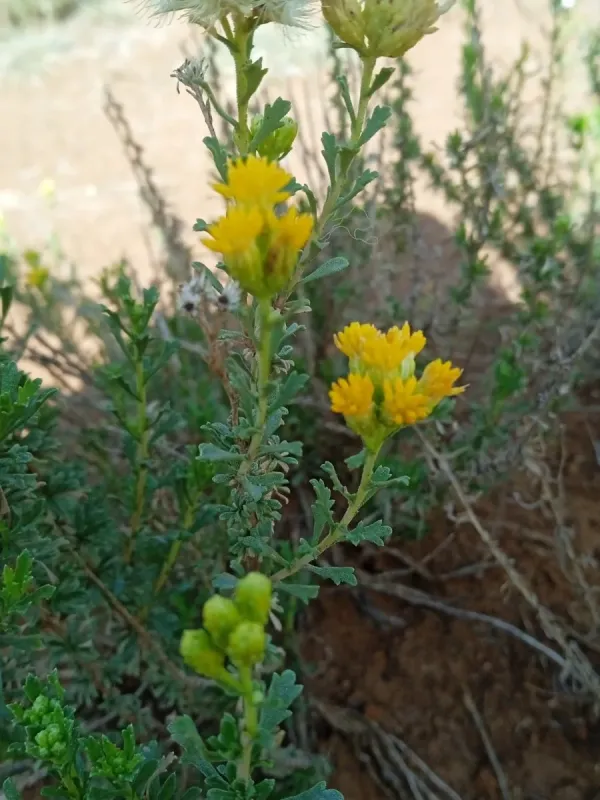
Description
Growing requirements
Isocoma hartwegii is a perennial subshrub belonging to the Asteraceae family. Native to the arid regions of the Southwestern United States and Northern Mexico, this species has evolved to thrive in environments characterized by extreme heat and erratic rainfall patterns.
The plant demonstrates remarkable adaptability to various soil types, particularly sandy, rocky, and alkaline soils. It is well-suited for areas where conventional agriculture struggles due to high salinity or poor soil fertility, marking it as a candidate for specialized land management.
Botanically, it is characterized by its woody base and upright stems topped with distinctive yellow flower heads. Its morphology is designed to minimize transpiration, featuring small, sometimes resinous leaves that protect the plant against intense solar radiation.
Cultural requirements emphasize the necessity of well-drained soil. Isocoma hartwegii does not tolerate waterlogged conditions, which are highly detrimental to its root system. Adequate sunlight exposure is essential for robust growth and optimal flowering phases.
Agricultural maintenance is minimal, as the plant is adapted to nutrient-poor substrates. Once established, the culture requires very little irrigation, making it a sustainable choice for water-restricted agricultural zones in desert climates.
Main diseases and pests
Isocoma hartwegii can be susceptible to typical desert pests, including aphids and spider mites. These insects thrive during periods of drought and can weaken the plant by feeding on its sap, particularly during the active spring growth cycle.
Fungal pathogens remain the most significant threat to the health of this species. Root rot and leaf spot diseases often occur when soil moisture levels are not properly managed, specifically when moisture remains trapped around the root crown for extended periods.
While the plant is generally competitive, early-stage management is vital. During the initial development of young plants, invasive weeds can outcompete the crop for space and sunlight, requiring mechanical removal to ensure successful crop establishment.
Specific herbivorous insects that specialize in Asteraceae can also cause damage. Monitoring for leaf-chewing larvae or sap-sucking insects is recommended to prevent significant loss of photosynthetic surface area, which is critical for the plant's survival.
Integrated Pest Management (IPM) strategies are suggested for this crop. By prioritizing cultural practices—such as proper irrigation timing and ensuring adequate spacing for airflow—producers can significantly reduce the incidence of both pests and fungal outbreaks.