
Isoberlinia scheffleri
Isoberlinia scheffleri
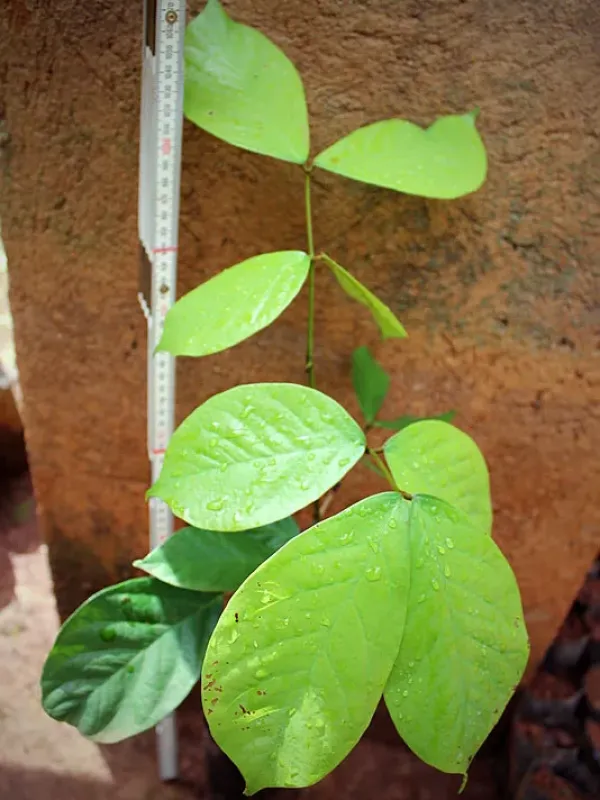
Description
Growing requirements
Isoberlinia scheffleri is a notable species within the Fabaceae family, belonging to the Caesalpinioideae subfamily. It is native to the tropical forests of Africa, where it thrives as a canopy or sub-canopy tree in diverse mountain and foothill landscapes.
The species requires deep, well-drained soils that provide adequate moisture retention without waterlogging. Its root system is highly sensitive to soil aeration, necessitating site selection that mimics the natural drainage patterns of its native habitat.
Climatic preferences include high annual precipitation levels and consistent tropical temperatures. Isoberlinia scheffleri is ill-adapted to arid conditions and extreme temperature fluctuations, requiring a stable environment for optimal photosynthetic activity.
A key biological feature of the tree is its ability to establish nitrogen-fixing symbioses. This adaptation allows the species to flourish in competitive forest environments and contributes to the overall nutrient cycling of its ecosystem.
Silvicultural efforts generally focus on nursery propagation and enrichment planting within forest reserves. Early establishment requires careful shade management to protect young saplings from direct, intense sunlight during their development phase.
Yield
The primary economic output derived from Isoberlinia scheffleri is high-quality timber. Its wood is valued for its durability and strength, making it suitable for structural applications and fine woodworking.
Yield metrics in forestry terms are determined by the age-class distribution of the forest stand. Given the species' moderate growth rate, long-term silvicultural cycles are mandatory to ensure sustainable production levels.
Quantitative biomass accumulation is heavily influenced by site quality and the density of the existing canopy. Proper management of forest stands can significantly improve the volume of marketable wood harvested from specific areas.
Currently, there is limited commercial domestication, so yield outcomes largely reflect the success of forest management practices in preserving the genetic potential of the trees. Sustainable harvesting is the only viable path for long-term supply.
Beyond the timber harvest, the species provides ecosystem services that preserve regional hydrology, which indirectly supports nearby agricultural crop yields by maintaining soil stability and moisture balance.
Main diseases and pests
The primary threat to Isoberlinia scheffleri is deforestation for agricultural expansion and land-use conversion. The loss of pristine forest habitat threatens the long-term viability of the population and decreases the availability of natural forest products.
Fungal pathogens represent a significant risk, particularly in nursery environments with poor ventilation or high humidity. These diseases can devastate young populations if sanitary control measures are not rigorously applied.
Wood-boring insects present a threat to stressed or declining individuals. Regular health assessments within forest plots are necessary to prevent infestations that could impact the structural integrity of the timber.
Invasive plant species can outcompete Isoberlinia scheffleri seedlings during the early establishment phase. Active management, including manual clearing, is often required to ensure that the young trees receive sufficient light and space to grow.
Climate-induced stress, characterized by shifting rainfall patterns, increases the vulnerability of the species to secondary biotic and abiotic factors. This necessitates a proactive approach to forest health monitoring in sensitive areas.