
Vinca difformis
Vinca difformis Pourr.
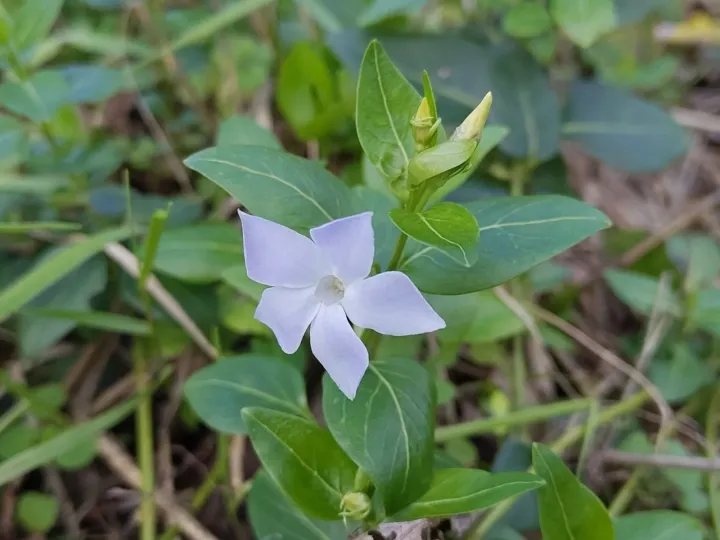
Description
Growing requirements
Vinca difformis, commonly known as the Mediterranean periwinkle, is a perennial evergreen plant belonging to the Apocynaceae family. Its native origin is found across the Mediterranean region, where it thrives in shaded woodland areas and damp valleys.
The plant requires moderate climatic conditions, preferring mild winters and cool, shaded environments. It is sensitive to extreme frost, which necessitates specific site selection in regions with harsh winters to ensure long-term survival.
Regarding soil requirements, Vinca difformis performs best in well-drained, humus-rich, and slightly moist soils. It does not tolerate waterlogging, so adequate drainage is essential for preventing root rot and ensuring healthy shoot development.
Cultivation practices include consistent moisture management, particularly during the establishment phase. The plant spreads via creeping stems that take root at the nodes, allowing it to act as an effective and aggressive groundcover in favorable conditions.
Its primary agricultural and horticultural use is as an ornamental groundcover. It is widely employed in landscaping to stabilize soil on shaded embankments and to suppress weed growth in parks and private gardens where grass struggle to survive.
Main diseases and pests
The most common disease threats include fungal infections such as leaf spot and rust, triggered by excessive humidity and poor air circulation. Proper spacing during planting is the primary cultural control method used by agronomists.
Insect pests include aphids and scale insects that target the soft tissue of new foliage. Management involves regular monitoring of plants during the growing season and the application of appropriate insecticides if threshold levels of infestation are exceeded.