
Big periwinkle
Vinca major L.
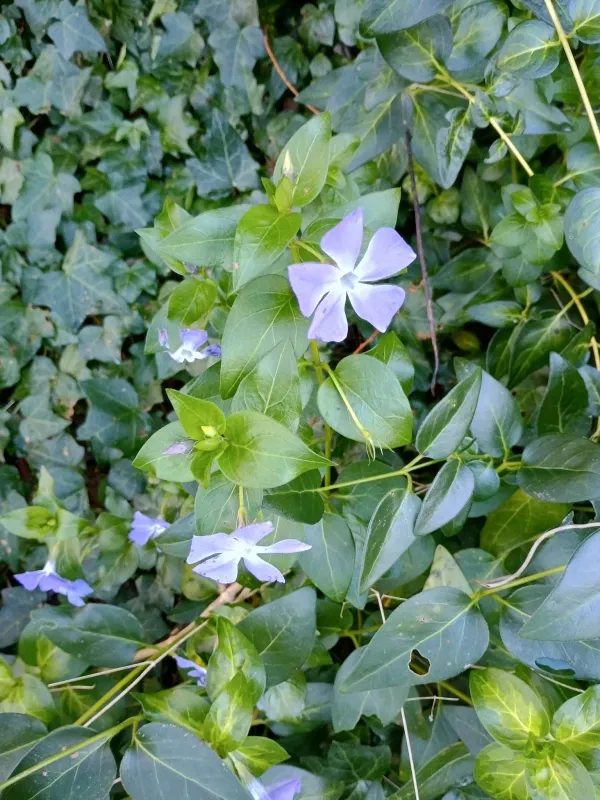
Description
Growing requirements
Big periwinkle (Vinca major) is a hardy perennial evergreen trailing shrub belonging to the Apocynaceae family. Native to the Mediterranean region, it is widely valued for its rapid growth and dense mat-forming habit.
The plant thrives in partial shade to full shade, which is essential for protecting its foliage from sun-scorch. While it can adapt to various light conditions, it prefers locations where it can maintain its natural moisture levels.
Cultivation requires well-drained, fertile soil rich in organic matter. Although it is quite tolerant of different pH levels, it performs best in soils that are consistently moist but not waterlogged to prevent root rot.
Botanically, Vinca major is characterized by its broad, ovate leaves and large, violet-blue flowers that appear throughout the growing season. The trailing stems have the ability to root at the nodes, allowing the plant to spread aggressively.
Standard care involves regular watering during dry spells and trimming back excessive growth to keep the plant within its desired area. It is a highly effective groundcover for erosion control on slopes.
Main diseases and pests
The primary threats to Vinca major are fungal pathogens, particularly leaf spot and rust, which often occur in high-humidity environments. These conditions can significantly reduce the ornamental value of the foliage.
Maintaining adequate airflow through the plant canopy is the best cultural control method. Periodic pruning helps remove decaying plant material and prevents the buildup of moisture that promotes fungal development.
Insect pests such as aphids and scale insects can infest the stems, weakening the plant and causing stunted growth. These pests often congregate on new, tender shoots where they are easiest to target with treatments.
- Monitor plants for signs of discoloration.
- Use systemic insecticides for severe infestations.
- Apply horticultural oils as a preventive measure.
If uncontrolled, these pests can facilitate the spread of secondary viral infections, leading to distorted growth. Regular inspection and early intervention are critical for maintaining healthy and vigorous periwinkle stands.