
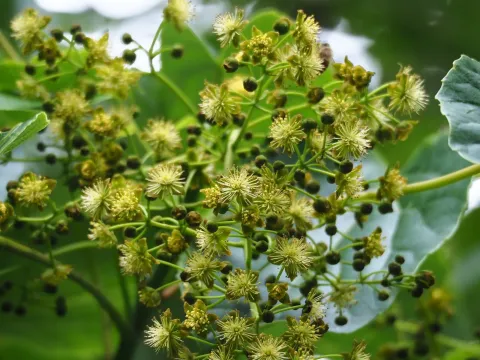
Idesia
Idesia
Propagation of Idesia is primarily carried out through seeds. Sowing is conducted in the spring following mandatory stratification, which lasts between one and two months at low temperatures.
What the section contains

Idesia
In industrial-scale cultivation, seeds are sown into prepared nurseries or containers with a light, well-draining substrate to ensure a high germination rate.
Young seedlings require protection from direct sunlight and consistent soil moisture during the first year of vegetation until they are transplanted to their permanent location.
The optimal time for transplanting seedlings into the field is early spring, after the danger of night frosts has passed, which allows the root system to adapt effectively.
The planting scheme must consider the tree's size at maturity, therefore a spacing of at least 5 to 6 meters between plants in rows is recommended.
Idesia polycarpa belongs to the Salicaceae family and is a deciduous tree native to East Asia, including China, Japan, and Korea.
The crop prefers a moderately warm climate and areas well-protected from strong winds, as young shoots can be damaged by sudden temperature fluctuations.
Successful growth requires fertile, deep, and moderately moist loamy soils with a neutral or slightly acidic soil pH.
The tree needs good lighting, although in hot climates, light shading is beneficial to prevent root system desiccation and leaf scorching.
Proper drainage is a critical factor: Idesia does not tolerate waterlogging, so in areas with high water tables, the installation of drainage channels is necessary.
The primary economic product of Idesia is its fruit—berries clustered in large bunches that ripen by late autumn and are characterized by a high oil content.
Yield depends on the tree's age: the onset of the active fruiting phase typically occurs 5 to 7 years after planting at the permanent site.
Technical use of the fruits focuses on the extraction of valuable fatty acids, which find applications in the food and cosmetic industries.
The amount of raw material harvested varies significantly depending on agricultural practices, light levels, and the regularity of crown pruning.
Under natural growing conditions, a single mature tree can produce dozens of kilograms of fruit annually when optimal agricultural conditions are met.
Idesia is a relatively resistant crop to typical fruit tree diseases, although fungal infections of the root system may occur if the soil is kept too wet.
The primary threat to the foliage can be leaf-eating insects, especially during periods of mass pest outbreaks in warm and humid spring weather.
To prevent the spread of pests, it is recommended to monitor crown health and carry out timely sanitary cleaning of the ground under the trees to remove fallen leaves.
During severe winters, there is a risk of shoot frost damage, which can open entry points for infections; therefore, it is important to maintain overall tree health through proper fertilization.
Disease prevention includes treatments with copper-based preparations during the dormant phase, which significantly reduces the risk of pathogen development on the tree bark.
The harvest of Idesia is conducted in late autumn when the fruits acquire a characteristic dark red or purple hue, indicating full maturity.
Because the fruits are collected in dense bunches, they must be carefully cut with shears, taking care not to damage the fruiting buds for the following year.
After harvesting, the berries require immediate primary processing: they should be dried or sent directly for processing to prevent rapid spoilage of the raw material.
For long-term storage or transportation, the harvest must be kept in ventilated containers to prevent the crushing or deformation of the delicate berries.
The timing of the harvest is crucial: unripe fruits have a low oil yield, while overripe ones may begin to drop due to strong wind gusts or early frosts.