
Ibervillea tenuisecta
Ibervillea tenuisecta
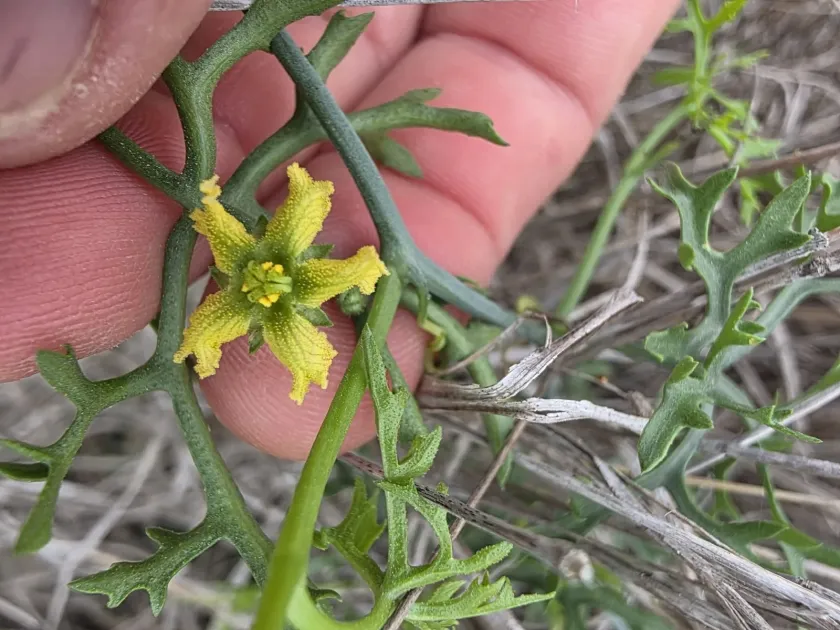
Description
Sowing dates
Propagating Ibervillea tenuisecta is primarily achieved through seeds, which require careful handling to ensure high germination rates. Scarification of the seed coat is highly recommended before sowing to facilitate moisture absorption and trigger growth.
Sowing should take place in a warm environment, ideally with temperatures maintained between 22°C and 28°C. Use a well-draining, sandy-based seed starter mix to prevent damping-off, a common issue for this species in its early stages.
Plant seeds approximately 1 cm deep and cover them lightly with substrate. Maintaining a consistent moisture level in the germination medium is crucial, but it should never be waterlogged, as the seeds are prone to rotting in stagnant water.
Once seedlings emerge, they require immediate access to bright, filtered light. Gradual exposure to stronger sunlight will help build the plant's resilience, which is essential for developing a strong, healthy caudex at the base.
After the first true leaves have developed, the young plants can be transplanted into individual pots. Use small containers initially to prevent the soil from holding excess moisture, as young roots are particularly sensitive to overwatering.
Growing requirements
Ibervillea tenuisecta is a drought-tolerant succulent vine that requires specific environmental conditions to thrive. It thrives in full sun exposure, which is necessary to maintain its compact growth form and encourage eventual flowering.
The ideal soil composition is a mineral-heavy mix, similar to those used for cacti and other caudiciform plants. A combination of coarse sand, perlite, and a small portion of organic potting soil works best to ensure excellent drainage.
Temperature control is vital for successful cultivation; the plant prefers warm conditions during its active growing season. It performs best when daytime temperatures range between 25°C and 35°C, with slightly cooler nights mimicking its native arid habitat.
Watering must be approached with caution, following a soak-and-dry cycle. The soil should be allowed to dry out completely between waterings to prevent root rot, and the plant should be kept almost dry throughout the winter dormancy period.
Fertilization should be kept to a minimum, using a low-nitrogen, high-potassium formula designed for succulents. Applying fertilizer only during the peak growing season helps promote structural integrity without encouraging excessive, weak growth.
Main diseases and pests
Root rot is the most significant threat to Ibervillea tenuisecta, often caused by overwatering or soil that retains too much moisture. If the caudex becomes soft or mushy, it indicates a severe compromise of the root system or crown.
Spider mites are common pests that thrive in the plant's preferred warm and dry conditions. They are known to infest the delicate, finely divided foliage, leading to discoloration, loss of leaves, and potential stunt in overall development.
Mealybugs can also pose a risk, often settling in the crevices of the stem or at the base of the plant. These pests can be effectively managed with systemic insecticides or manual removal using an alcohol-soaked swab for localized infestations.
Poor ventilation can lead to fungal infections, especially during periods of high humidity. Keeping the air around the plant moving, perhaps with a small fan in a greenhouse setting, significantly reduces the likelihood of leaf spots and molds.
Finally, improper light levels can result in etiolation, where the vine becomes thin and weak. While not a disease itself, this state makes the plant much more susceptible to physiological stress and subsequent pest attacks.