
Hypocalymma angustifolium
Hypocalymma angustifolium
Description
Sowing dates
Sowing Hypocalymma angustifolium seeds is best performed in late winter or early spring to allow the seedlings sufficient time to establish before summer heat.
Seeds require a consistent temperature between 18 and 22 degrees Celsius and a high-quality moist substrate to trigger germination successfully.
For commercial propagation, semi-hardwood cuttings are preferred as they ensure genetic uniformity and faster development of marketable floral stems.
Cuttings should be placed in a well-draining sandy mix and kept under a poly tunnel to maintain high humidity levels throughout the rooting period.
Once rooted, seedlings should be carefully potted into individual containers with excellent drainage to prevent any transplant shock or root damage.
Growing requirements
Hypocalymma angustifolium is a member of the Myrtaceae family, native to the southwestern regions of Western Australia, where it thrives in sandy, nutrient-poor soils.
The plant strictly requires extremely well-drained soil conditions; waterlogging is the most common cause of failure in cultivation.
Full sun exposure is essential for maintaining the compact growth habit and ensuring the plant produces the maximum number of floral buds during the season.
In cooler climates, this species must be treated as a container plant and moved to a frost-free environment during the winter months to survive.
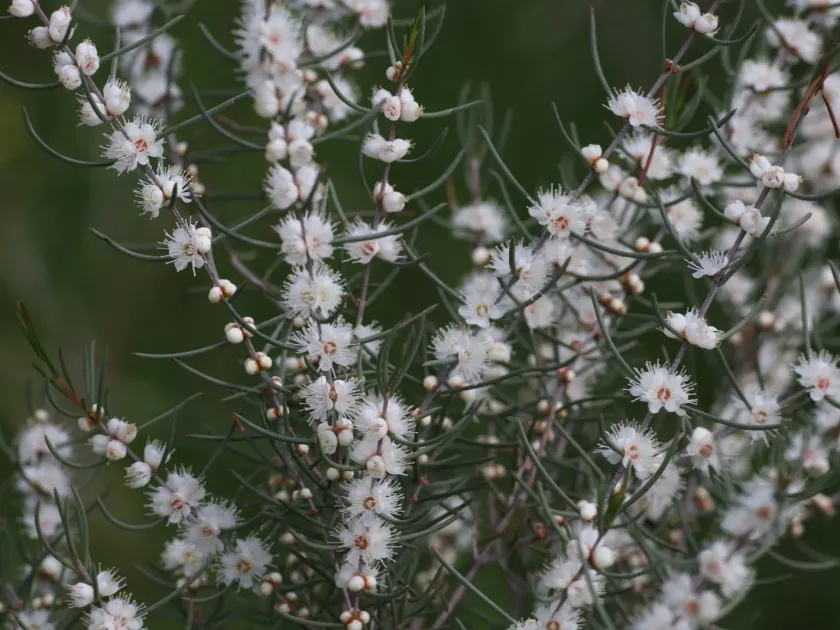
The species is a charming evergreen shrub characterized by fine, linear foliage and clusters of fragrant, cup-shaped flowers that appear in spring.
Yield
The primary commercial use for this species is the production of high-quality cut flowers, highly valued in the floristry trade for their durability.
Annual yields are optimized through systematic pruning, which is conducted immediately after the main flowering season to encourage vigorous new growth.
Proper fertilization is critical; however, growers must use fertilizers low in phosphorus, as Myrtaceae species are highly sensitive to this nutrient.
Harvesting is best carried out in the cool early morning hours to ensure maximum water uptake and shelf life for the cut flower stalks.
Commercial production requires a rotation strategy to maintain plant health and prevent the exhaustion of the substrate or soil nutrients over time.
Main diseases and pests
The most significant threat to plant longevity is root rot, typically caused by Phytophthora species thriving in overly damp soil conditions.
Inadequate airflow in greenhouse environments can quickly lead to outbreaks of powdery mildew, which affects both foliage and flower quality.
- Phytophthora root rot.
- Powdery mildew infections.
- Aphid infestations on new growth.
- Spider mites during periods of low humidity.
Integrated pest management should focus on cultural controls, such as spacing plants to allow air circulation and monitoring moisture levels precisely.
Chemical control should be applied sparingly, always ensuring that the chosen products are safe for sensitive Australian native plants.