
Doum palm
Hyphaene thebaica
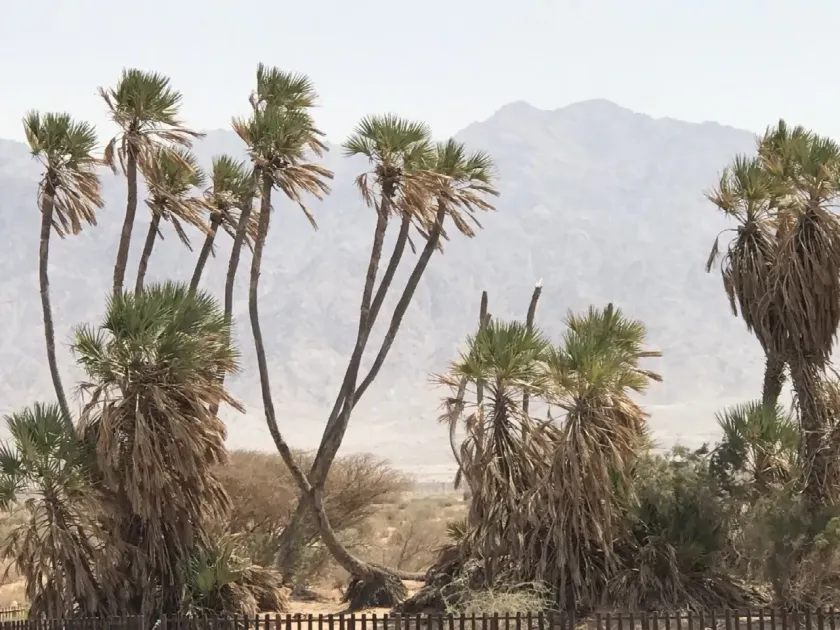
Description
Sowing dates
Propagation of Hyphaene thebaica is primarily achieved through seeds, which require specific conditions to break dormancy. Scarification of the hard outer seed coat is often recommended to speed up the germination process.
Sowing should be performed when soil temperatures are consistently above 25 degrees Celsius. Ensuring a warm environment is vital for the development of the primary root system in the early stages of growth.
Seedlings show a very slow growth rate initially, as the plant prioritizes building a strong deep root structure. Planting depth should be approximately 5 to 7 centimeters in a well-drained substrate.
In professional nursery practices, seeds are often germinated in controlled containers before being transplanted to the field. Care must be taken to minimize root disturbance during the transfer process.
Proper drainage is the most critical factor during the sowing phase. Stagnant water can quickly lead to seed rot, thus the planting site must be carefully evaluated for water-logging risks.
Growing requirements
The doum palm, scientifically known as Hyphaene thebaica, belongs to the Arecaceae family. It is famous for being one of the few palms that naturally branches its trunk.
This species is highly heliophilic and drought-resistant, making it a perfect candidate for agriculture in semi-arid and savanna ecosystems where other crops may fail to survive.
The plant thrives in deep, well-drained sandy or loamy soils. It is remarkably tolerant to extreme heat and can withstand significant fluctuations in daily temperatures typical of its native environment.
While the tree is drought-tolerant, its growth is significantly improved when there is access to groundwater or occasional deep irrigation. However, it absolutely requires full, direct sun exposure to maintain its vigor.
Over-irrigation or high humidity is the greatest enemy of this palm, as it can cause crown and root rot, which are often fatal to young plants in poorly managed commercial plantations.
Yield
The yield of the doum palm is highly dependent on the tree's age and the availability of groundwater. The fruits are large, brown drupes featuring a fibrous husk and a hard, nut-like seed.
Typically, the tree begins to produce fruit around the age of 10 to 15 years. A mature, healthy specimen can provide significant annual yields, offering sustainable income for local farmers.
The fibrous pulp of the fruit is edible and has a distinct flavor often compared to gingerbread. The seeds are highly valued for their hardness, being processed into what is known as vegetable ivory.
Beyond the fruit, the leaves are an essential agricultural byproduct. They are harvested for weaving mats, baskets, and thatching, creating a secondary revenue stream for producers.
Due to its long productive lifespan, which can span several decades, the doum palm is considered an excellent long-term investment for agricultural development in desert-adjacent regions.
Main diseases and pests
Fungal diseases are the primary threat to Hyphaene thebaica, usually triggered by improper watering practices or high humidity, which can lead to leaf spots and tissue necrosis.
Various palm weevils and borers represent the most significant pest risk. Their larvae can burrow into the trunk and destroy the apical meristem, often leading to the sudden death of the tree.
Monitoring the growth point is essential to catch pest infestations early. If the central bud is damaged, the tree often ceases to grow and may become susceptible to secondary infections.
Preventative management is key because chemical control is difficult to implement on mature, tall trees. Maintaining a clean plantation environment helps reduce the likelihood of pest outbreaks.
In nursery stages, systemic insecticides can be used to protect young plants, but biological control methods are preferred as the trees mature and the focus shifts to organic production.
Harvesting
Harvesting the fruits of the doum palm is a labor-intensive process performed by hand. Because the trees can grow quite tall, specialized ladders are usually required to reach the fruit bunches.
Maturity is visually identified by the darkening of the outer skin to a rich brown color. Harvesters carefully cut the fruit clusters from the tree to avoid damaging the surrounding foliage.
Post-harvest management involves drying the fruit to preserve the pulp and preparing the seeds for processing. Proper storage in dry, well-ventilated conditions is essential to prevent mold growth.
The harvest season is often spread over several months, requiring efficient logistical planning to ensure that the yield is collected at the peak of quality for the intended market.
In addition to fruits, the harvesting of leaves for craft production is integrated into the annual cycle, maximizing the total utility and profitability of the palm plantation.