
Hyphaene dichotoma
Hyphaene dichotoma
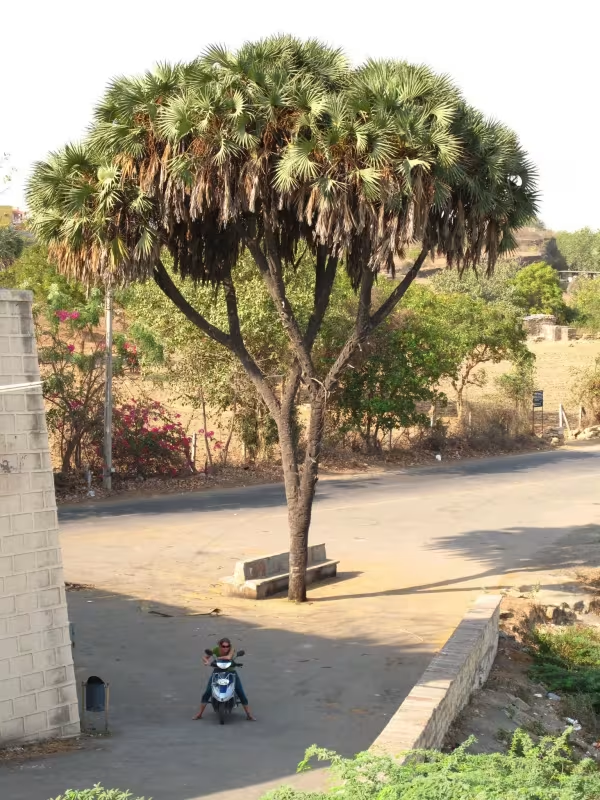
Description
Growing requirements
Hyphaene dichotoma is a remarkable species within the Arecaceae family. It is distinct for its unique biological trait: the ability of the stem to branch dichotomously, which is an evolutionary rarity among palm species found in the wild.
Originating from the coastal regions of India, specifically in Gujarat, this plant is well-adapted to maritime conditions. It thrives in environments where high humidity and warm temperatures remain consistent throughout the year, supporting its vigorous growth.
The cultural requirements for this palm include well-drained, sandy or alluvial soils. While the species demonstrates a high tolerance for salinity, it performs optimally when provided with deep, nutrient-rich soil that allows for efficient root penetration.
Regarding agrotechnical practices, full sun exposure is non-negotiable. Young plants require careful attention to irrigation to establish a strong root system, while adult trees can endure periodic dry spells due to their deep-reaching roots.
Effective plantation management involves spacing considerations, as the dichotomous branching results in a broad canopy. Providing enough space ensures that each specimen receives adequate sunlight, which is vital for the health and structural integrity of the palm.
Main diseases and pests
Pest management focuses primarily on the palm weevil, a significant threat to all members of the Arecaceae family. Integrated pest management, including regular tree inspection and the use of pheromone traps, is critical for survival.
Root rot and fungal pathogens pose a threat if the soil remains waterlogged. Ensuring optimal drainage is the most effective way to prevent these diseases, as moisture accumulation around the base of the stem leads to rapid decay.
Harvesting
The economic utilization of Hyphaene dichotoma is extensive. The fruit, often called the "dum nut" in related species, provides a fibrous pulp that is harvested for human consumption, contributing to local food security in coastal areas.
The leaves are harvested for their high-quality fiber content. These fibers are mechanically processed to create ropes, mats, and traditional woven goods that are highly valued for their resistance to seawater and humidity.
The timber obtained from the palm is used in rural construction. It is particularly valued for its durability in outdoor applications, serving as structural support for local buildings and infrastructure near the coast.
Seed harvesting is conducted with the aim of both local propagation and commercial seed trading. The seeds, protected by a dense endocarp, require specialized pre-sowing treatments to break dormancy and ensure high germination rates.
Additionally, the aesthetic value of the palm promotes its use in eco-tourism and landscaping. Its unique branched appearance makes it a prized specimen for public parks and luxury tropical garden developments, enhancing site value.