
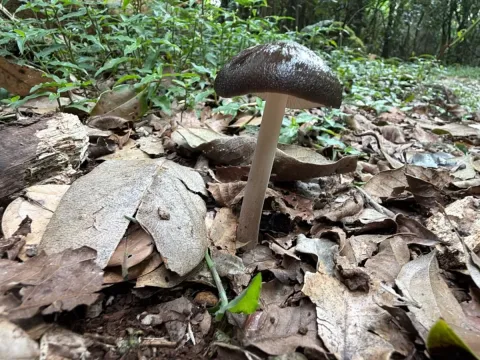
Hymenopellis
Hymenopellis R.H. Petersen
Hymenopellis is a genus of mushrooms belonging to the Physalacriaceae family. These fungi are biologically classified as wood-decay species that play a significant role in decomposing organic matter in forest ecosystems, effectively cycling nutrients back into the soil.
What the section contains

Hymenopellis
In a controlled agricultural environment, Hymenopellis requires a substrate composed primarily of hardwood sawdust or wood chips. Supplements such as wheat bran or rice bran are added to increase nitrogen content and promote faster mycelial colonization of the blocks.
The climate requirements for successful cultivation include maintaining a room temperature of approximately 20–22°C during the incubation period. Excessive heat must be avoided, as temperatures exceeding 25°C can weaken the mycelium and lead to substrate dehydration.
Proper aeration is essential throughout all growth stages. High concentrations of carbon dioxide inhibit normal cap development, leading to long, spindly stalks and low fruit quality. Growers must ensure continuous fresh air exchange to maintain CO2 levels below 800 ppm during fruiting.
Humidity management is crucial for the initiation and growth of fruit bodies. During the pinning stage, relative humidity should be maintained at 90 percent, gradually decreasing to 80 percent as the mushrooms mature to prevent waterlogging and bacterial blotch.
The primary threats to Hymenopellis crops are fungal pathogens, specifically green mold (Trichoderma), which can aggressively colonize substrate blocks before the primary mycelium establishes dominance, leading to complete crop failure.
Insect pests, particularly sciarid flies and phorid flies, pose a constant challenge. They are attracted to the smell of decomposing organic matter and can deposit eggs in the substrate, where larvae feed on the developing mycelium and fruit tissues.
Bacterial blotch, caused by Pseudomonas tolaasii, often appears as yellow or brown spots on the mushroom cap. This condition is primarily linked to poor ventilation and excessive moisture staying on the surface of the fruit bodies for too long.
Mites can also be a significant issue in mushroom farms, often introduced through contaminated equipment or poor sanitation protocols. These pests can cause severe damage by feeding on the mycelium and reducing the overall yield of the farm.
Integrated pest management (IPM) is essential for success. This includes regular sanitization of the growing environment, maintaining proper airflow, and utilizing physical barriers like fine mesh screening to prevent insect ingress into the mushroom houses.