
Beach spider lily
Hymenocallis littoralis
Description
Growing requirements
The Beach spider lily (Hymenocallis littoralis) is a perennial bulbous plant belonging to the Amaryllidaceae family. It is native to tropical coastal areas of the Americas, where it naturally thrives in sandy, well-draining coastal soils.
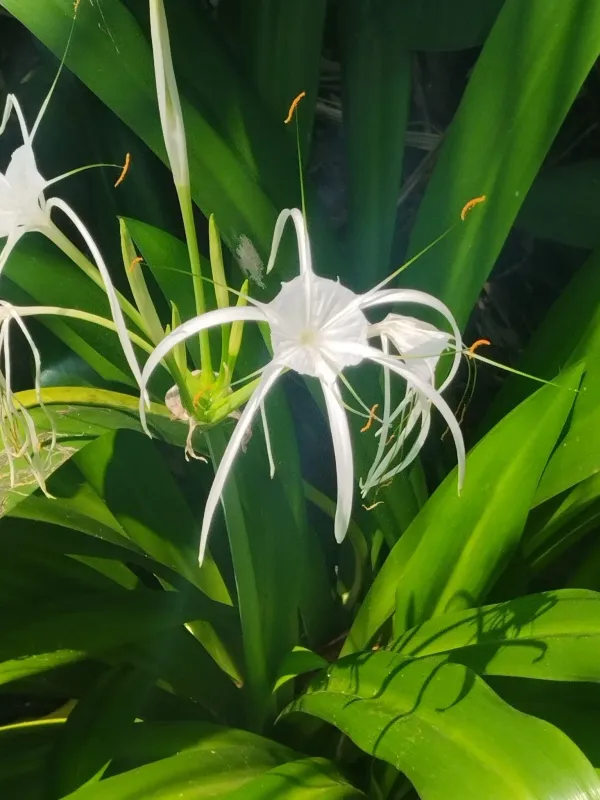
The plant features long, strap-shaped leaves and highly fragrant white flowers. Its distinctive appearance is defined by a central corona and elongated stamens, which make it a popular ornamental selection for tropical gardens.
Cultivation requires a warm, frost-free climate throughout the year. In temperate zones, it is widely grown in containers, which allows moving the plants indoors before the onset of cold weather.
Soil requirements are specific: the medium must be highly porous and well-draining. A mixture of sand, peat, and organic humus is recommended to mimic its natural, nutrient-rich coastal habitat.
The species demands a steady supply of moisture during its growing season but requires a dormant period with reduced watering during the cooler winter months to encourage future flowering.
Main diseases and pests
Scale insects and mealybugs are the primary pests that infest the foliage of the Beach spider lily. Regular monitoring and the application of horticultural oils help in managing these populations.
Root rot is the most serious threat, usually caused by overwatering or poor drainage. Once the bulb begins to decay, recovery becomes difficult, emphasizing the need for proper irrigation control.
Red blotch (Stagonospora curtisii) is a common fungal disease that manifests as reddish lesions on the bulbs and leaves. It is often triggered by excessive moisture and poor ventilation.
Spider mites may appear if the environmental conditions are too dry. Maintaining optimal air humidity around the plant helps prevent these pests from establishing colonies.
Preventive maintenance, such as sterilizing the soil during repotting and ensuring proper spacing between plants, is essential for maintaining the overall health of the crop.