
Haworthiopsis limifolia and fasciata hybrid
hybrids between Haworthiopsis limifolia (Marloth) G. D. Rowley and Haworthiopsis fasciata (Willd.) Haw.
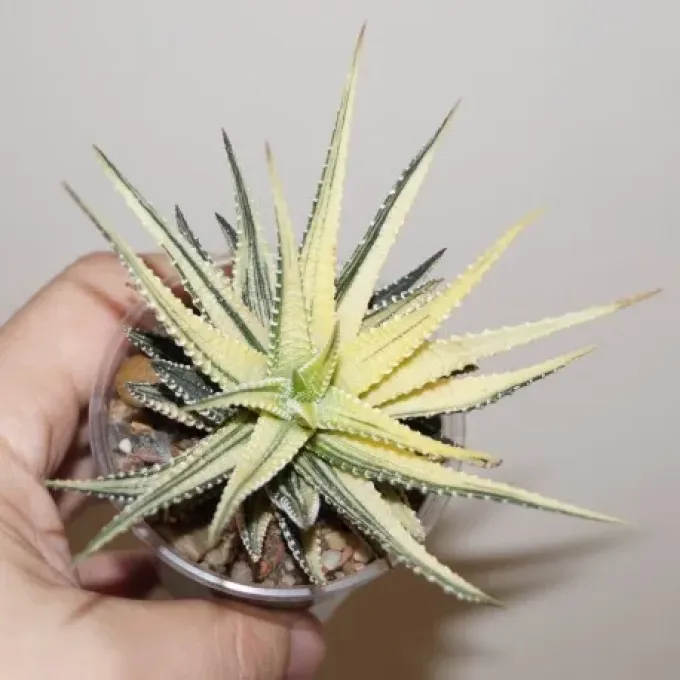
Description
Growing requirements
This hybrid belongs to the Asphodelaceae family and represents a robust succulent with distinctive leaf morphology. The plant features thick, triangular leaves arranged in a rosette, typically displaying the prominent ridges of H. limifolia and the white, warty tubercles typical of H. fasciata.
Native to South Africa, these succulents thrive in arid climates. Cultivation requires bright, indirect sunlight to maintain the compact growth habit. Insufficient light results in etiolation, where the plant loses its structural integrity and ornamental value.
A well-draining soil mix is mandatory. A standard mix should include gritty inorganic materials such as pumice, perlite, and coarse sand. This ensures rapid drainage, preventing the saturation of the root system which is critical for preventing physiological stress.
Temperature requirements involve a warm growing season ranging from 20°C to 27°C. During the dormant winter period, the plant benefits from cooler temperatures (around 10°C to 15°C) and significantly reduced watering, mimicking its natural environmental cycle.
Watering should be approached with caution: only water when the substrate is completely dry. Overwatering is the most common cause of failure in cultivating this hybrid, as it quickly leads to root rot and fungal colonization of the leaf tissues.
Main diseases and pests
Root rot, often caused by the pathogen Phytophthora or excessive moisture, is the primary threat to the health of this succulent. Proper aeration of the substrate is the most effective preventive measure against this condition.
Mealybugs are the most prevalent pest. They tend to hide deep within the crevices between leaves. If left unchecked, they suck the sap, weakening the plant and potentially leading to the formation of secondary mold on the leaves.
Control strategies include the use of systemic insecticides, which are absorbed by the plant and provide long-term protection. For localized infestations, direct application of horticultural oils or isopropyl alcohol can be effective.
Fungal leaf spot can occur if humidity levels remain too high for extended periods without adequate air circulation. Keeping the leaves dry and ensuring good ventilation is essential for disease suppression.
Maintaining a balanced nutritional profile is key; an over-application of nitrogenous fertilizers can make the tissues succulent and soft, creating an attractive target for sucking insects like aphids or mealybugs.