
Oceanspray
Holodiscus discolor
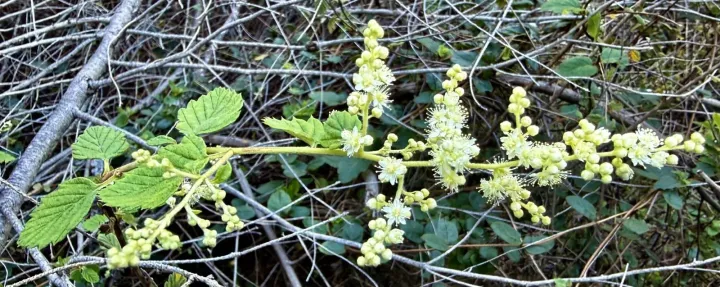
Description
Growing requirements
Oceanspray (Holodiscus discolor) is a deciduous shrub belonging to the Rosaceae family. It is native to Western North America, where it typically thrives in forest clearings and on rocky mountain slopes.
The plant requires well-drained soil and performs best in sites with a neutral to slightly acidic pH. While it is adaptable, it does not thrive in waterlogged conditions, making proper soil drainage a top priority for gardeners.
Regarding light, it thrives in full sun but tolerates partial shade. In sunnier exposures, the shrub produces a denser display of its characteristic arching, plume-like inflorescences.
It is known for its impressive cold hardiness, adapting well to a variety of temperate climates. It exhibits moderate drought tolerance once established, though supplemental watering during intense summer heat improves its vigor.
Cultural practices should include pruning in late winter or early spring. Removing dead or crossing branches encourages new growth and maintains the shrub's natural, graceful form.
Yield
Oceanspray is primarily valued for its ornamental characteristics in landscape design. Its cascading white-to-cream flowers provide a stunning visual element in native plant gardens and shrub borders.
As a significant nectar source, the shrub plays a crucial ecological role by supporting various native pollinators, including bees and butterflies, during the peak summer months.
Historically, the wood of Holodiscus discolor is famously hard and durable. Indigenous cultures utilized the branches to manufacture tools, arrow shafts, and implements, demonstrating its utility beyond aesthetics.
Propagation is typically achieved via seeds or softwood cuttings. Seeds often require a period of stratification to break dormancy and ensure uniform germination rates across the planting site.
Its deep and extensive root system makes Oceanspray an excellent choice for erosion control. Planting it on embankments helps stabilize the soil while adding seasonal beauty to the landscape.
Main diseases and pests
The plant is generally resilient to pests and diseases, which is a major advantage for low-maintenance gardening. Problems rarely occur if the site conditions are optimized for the plant's needs.
Occasionally, aphids or spider mites may infest the foliage. Monitoring the plant during the early growth stages is recommended, and localized treatment can be applied if significant damage is observed.
Fungal issues, such as powdery mildew, may arise in areas with poor airflow and high humidity. Maintaining proper spacing between shrubs reduces the likelihood of these pathogens establishing themselves.
Root rot is the most serious risk, usually stemming from over-irrigation or inadequate soil drainage. Ensuring that the crown remains dry and that soil moisture levels are balanced is essential.
Maintaining a clean garden bed by removing leaf litter beneath the canopy can help prevent the overwintering of potential pests and fungal spores, ensuring the long-term health of the shrub.