
Hohenbergia stellata
Hohenbergia stellata
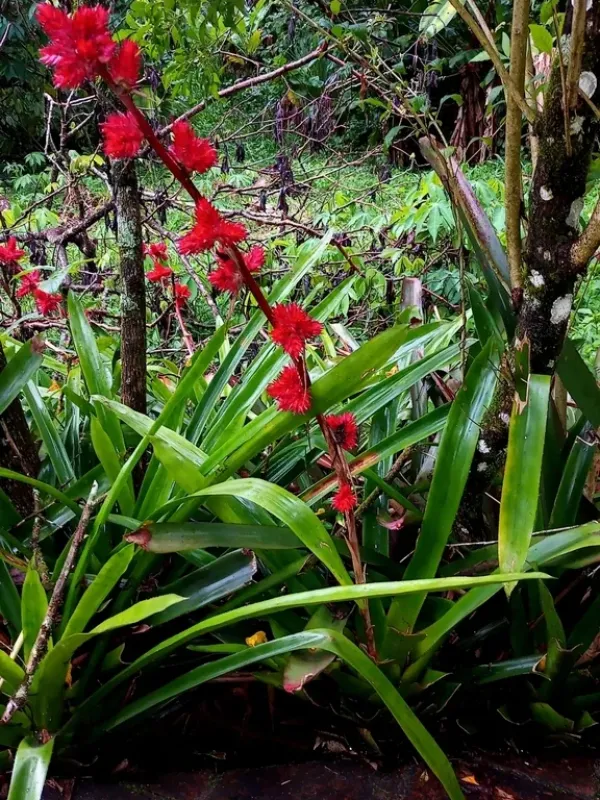
Description
Growing requirements
Hohenbergia stellata is a fascinating species belonging to the Bromeliaceae family, widely recognized for its striking structural beauty. Originating from the tropical forests of Brazil, this plant naturally thrives as an epiphyte or lithophyte, anchoring itself to trees or rocks while absorbing moisture and nutrients through its central rosette.
Botanically, the plant features a robust, funnel-shaped rosette consisting of stiff, leathery leaves with serrated margins. The leaf surface is typically covered with silver-grey scales known as trichomes, which are specialized organs that allow the plant to absorb atmospheric moisture and nutrients efficiently in its native tropical habitat.
Regarding climatic requirements, this species demands bright, filtered light to prevent leaf scorching while maintaining the intensity of its coloration. It prefers warm temperatures between 18 and 28 degrees Celsius and thrives in high humidity environments, making it suitable for greenhouses or controlled indoor climates.
The substrate must be exceptionally well-draining to mimic the plant's natural growth conditions. A suitable growing medium includes a mix of pine bark, sphagnum moss, and charcoal, which ensures that roots receive enough oxygen while avoiding the waterlogging that often leads to rot in epiphytic species.
In commercial and amateur cultivation, Hohenbergia stellata is highly valued for its ornamental appeal, particularly its complex inflorescences. These inflorescences are composed of vibrant bracts and small flowers, making the plant a preferred choice for botanical displays and tropical landscape design in frost-free regions.
Main diseases and pests
Common pests affecting this bromeliad include mealybugs and scale insects, which often congregate in the leaf axils. Effective management involves regular inspection and the application of mild horticultural oils or targeted insecticidal soaps to keep the plant foliage healthy and clean.
Root and crown rot are the most significant threats caused by improper irrigation practices, specifically standing water in the substrate or the rosette. To mitigate this risk, growers should ensure adequate air circulation and use soft, room-temperature water applied sparingly directly into the central cup.