
Hohenbergia rosea
Hohenbergia rosea
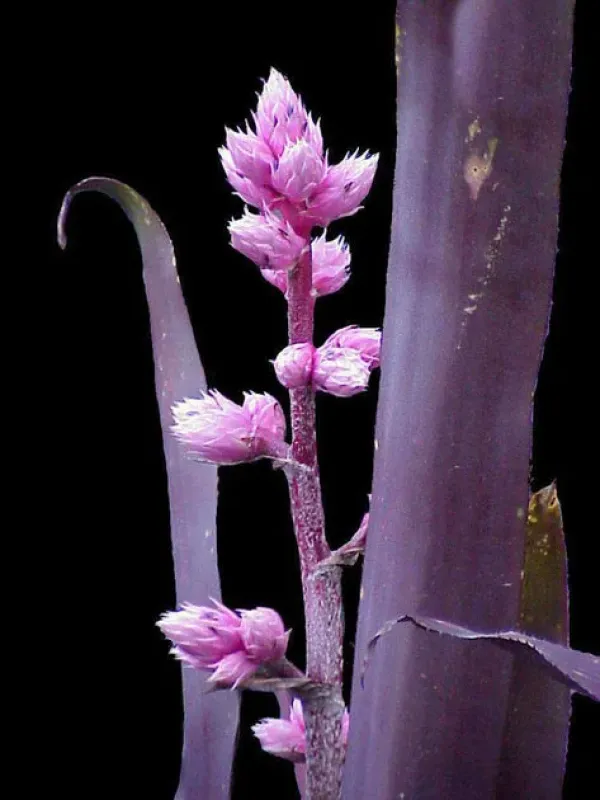
Description
Growing requirements
Hohenbergia rosea is a distinct species belonging to the Bromeliaceae family. Originating from the tropical regions of Brazil, this plant has adapted to survive in warm and humid environments, often growing as an epiphyte on trees or on rocky substrates.
To cultivate this species successfully, a greenhouse or controlled environment is necessary to maintain temperatures between +22°C and +28°C. Protecting the plant from cold drafts and sudden temperature fluctuations is essential for its vegetative health.
The substrate requirements are specific to epiphytic plants: a porous, fast-draining mix composed of pine bark, peat moss, perlite, and charcoal. This structure ensures that roots are adequately oxygenated while retaining necessary moisture.
Light intensity is a critical factor for Hohenbergia rosea. It thrives in bright, filtered light; too much shade leads to etiolation, while intense direct sunlight can scorch the thick, waxy leaves, damaging the plant's aesthetic and physiological functions.
Irrigation must be precise, focusing on filling the central tank of the rosette with soft, dechlorinated water. The roots primarily serve as an anchor, while the central reservoir facilitates the uptake of water and supplemental nutrients.
Main diseases and pests
The most significant threat to Hohenbergia rosea is root rot, which typically occurs when the substrate remains waterlogged. Ensuring a proper drainage layer is vital to prevent anaerobic conditions from killing the root system.
Scale insects present a major pest challenge. They are difficult to eradicate because they nest deep within the leaf axils. Mechanical removal combined with targeted systemic treatments is the most effective management strategy.
Mealybugs are another common nuisance that can quickly infest the foliage. These pests suck the sap from the plant, weakening the rosette and making it susceptible to secondary infections or fungal diseases.
Spider mites are common in low-humidity environments, especially during winter months. Maintaining high ambient humidity levels and regular misting are essential cultural practices to deter these pests from establishing a population.
Fungal pathogens can arise if there is poor air circulation around the plant. Stagnant air allows spores to settle and germinate, causing unsightly spots and tissue degradation, which can be mitigated by installing proper ventilation fans in the growing area.