
Hohenbergia penduliflora
Hohenbergia penduliflora
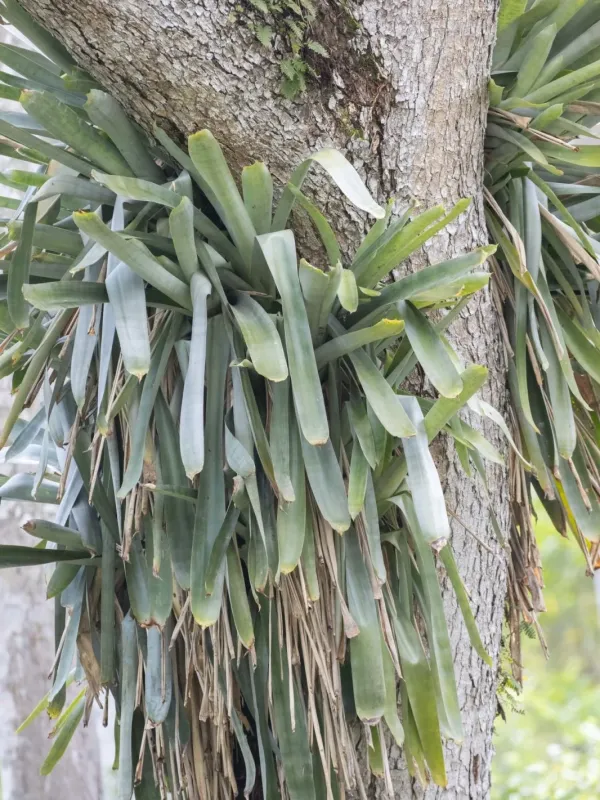
Description
Growing requirements
Hohenbergia penduliflora is an ornamental member of the Bromeliaceae family, native to the tropical forests of Jamaica. It is prized for its unique architectural rosette and pendulous inflorescences.
In cultivation, this plant requires bright, indirect light to maintain its vibrant leaf coloration. Direct afternoon sun can easily scorch the delicate foliage of the plant.
The ideal growing medium should be well-draining, similar to those used for orchids. A mixture of pine bark, perlite, and a small amount of peat moss provides the necessary aeration for the root system.
Consistent temperatures are crucial for this species; it thrives in environments ranging from 18°C to 26°C. It is not cold-hardy and should be kept away from frost or cold drafts.
Watering techniques involve filling the central tank (the urn formed by the leaves) with distilled or rainwater. The tank should be flushed regularly to prevent salt accumulation and stagnant water buildup.
Main diseases and pests
Scale insects are a common pest for Hohenbergia, appearing as small brown bumps on the leaves. They can be manually removed with a cotton swab dipped in isopropyl alcohol.
Root rot is a significant danger caused by poor drainage or overly heavy potting media. If the soil remains soggy for too long, the root system will quickly deteriorate and die.
Mealybugs may colonize the base of the leaves, especially in warm, stagnant air. Their presence is indicated by a white, cottony substance appearing in the leaf axils.
Fungal leaf spot can occur if the foliage remains wet for extended periods in low light conditions. Proper air circulation is the best preventative measure against such diseases.
Maintaining high humidity and regular monitoring of the plant's health will prevent most pest infestations and physiological disorders throughout its growth cycle.