
Heteromeles
Heteromeles
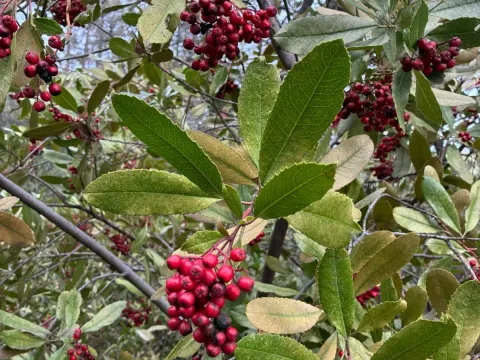
Heteromeles, specifically Heteromeles arbutifolia, is an evergreen shrub or small tree belonging to the Rosaceae family. Commonly known as toyon or California holly, it is native to the chaparral regions of California and the Baja Peninsula, where it thrives in a Mediterranean climate.
What the section contains

Heteromeles
The plant is highly valued for its drought tolerance and adaptability to various soil types, ranging from rocky slopes to heavy clays, provided there is adequate drainage. It performs best in full sun but can tolerate partial shade, making it a versatile choice for landscaping.
Botanically, it is characterized by its stiff, leathery, serrated leaves and clusters of small, white, five-petaled flowers. By late autumn, the shrub produces dense clusters of bright red pome fruits that are highly ornamental and provide a critical food source for local bird populations.
Regarding agricultural management, Heteromeles requires minimal maintenance once established. It rarely requires supplemental fertilization and is best planted during the cool, wet season to encourage deep rooting before the onset of the summer drought.
Its primary agricultural and landscaping use is in xeriscaping and habitat restoration. The plant serves as an excellent erosion controller on slopes and provides year-round structural interest in urban gardens and native plant settings.
The most frequent phytopathological challenge for Heteromeles is powdery mildew, particularly in coastal areas with high fog and humidity. Maintaining proper spacing and selecting well-ventilated planting sites are the most effective non-chemical control strategies.
Fire blight (caused by Erwinia amylovora) is another serious concern, as the plant is a member of the rose family. Infected branches should be pruned back to healthy wood, with tools disinfected between every cut to prevent further transmission.
Pests such as scale insects may periodically infest the foliage. These pests can be managed through the application of horticultural oils or by encouraging natural predators, such as ladybugs, which are often present in healthy garden ecosystems.
Root rot, typically caused by Phytophthora species, is often the result of improper irrigation practices or poor soil drainage. Ensuring that the soil remains well-aerated and never waterlogged is essential for long-term plant health.
Overall, Heteromeles is a robust, low-input plant. By focusing on site selection and proper moisture management during the initial growth phase, gardeners can successfully avoid most of the common threats associated with this species.