
Toyon
Heteromeles arbutifolia
Description
Growing requirements
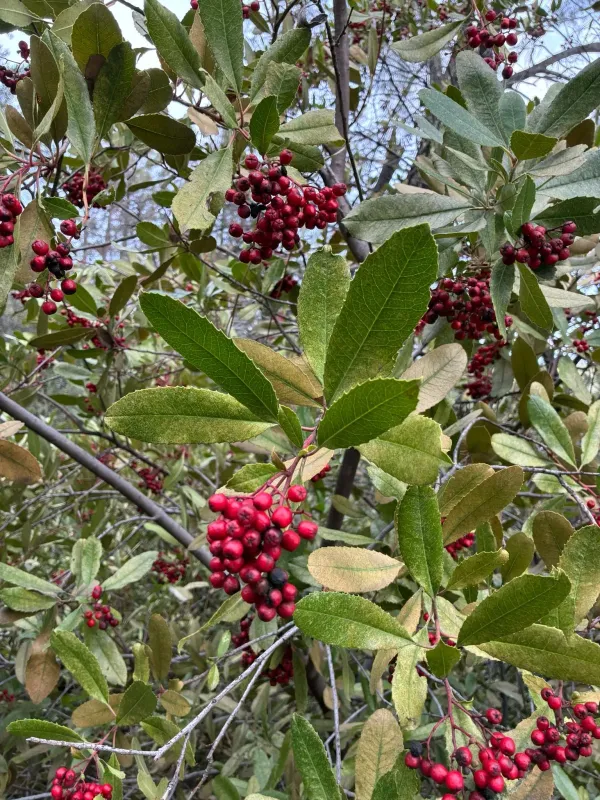
Toyon (Heteromeles arbutifolia), often called California Christmas berry, is an evergreen shrub or small tree belonging to the Rosaceae family. It is a hallmark of the California chaparral ecosystem and is highly valued for its year-round appeal.
The plant thrives in Mediterranean-type climates characterized by warm, dry summers and cool, wet winters. It is native to the coastal regions and foothills of California, adapting well to diverse soil types including rocky and clay-heavy soils.
Effective drainage is crucial for Toyon. While it is hardy in many conditions, it suffers in poorly drained environments where roots can become susceptible to fungal pathogens. Planting on slopes or raised beds is often recommended.
Toyon requires full sun to partial shade. Exposure to direct sunlight encourages denser foliage and more prolific flowering, leading to a higher yield of berries in the late autumn and winter seasons.
Once established, the shrub is remarkably drought-tolerant. Irrigation should be limited to the first year of growth; mature plants rely on their extensive root systems to thrive even in arid conditions without supplemental water.
Main diseases and pests
Fire blight (Erwinia amylovora) is the most significant threat to Toyon, as it is a common issue for many members of the Rosaceae family. Infections can cause dieback in branches and necessitate immediate pruning of affected areas.
Powdery mildew can occur during periods of high humidity or poor airflow. Ensuring adequate spacing between plants significantly reduces the risk of fungal outbreaks by promoting good ventilation within the canopy.
Scale insects and aphids occasionally infest young growth, potentially leading to stunted development. Regular inspection of the undersides of leaves and stems is essential for early detection and control.
Root rot caused by Phytophthora species is a major risk in areas with standing water. Preventive measures include minimizing surface irrigation and ensuring the soil structure allows for rapid water percolation.
Integrated pest management strategies are encouraged to maintain plant health. This includes promoting beneficial insects and avoiding harsh chemical sprays that may disrupt the natural balance of the garden ecosystem.
Harvesting
The harvest of Toyon berries typically begins in late autumn and can extend through early winter. The berries turn a brilliant, festive red as they ripen, making them a popular choice for seasonal decoration.
Culinary uses for the berries are well-documented. Although they contain a slight bitterness, boiling or cooking them removes these compounds, allowing them to be used in jams, jellies, and puddings.
Harvesting should be done carefully to preserve the shape of the shrub. Using hand pruners to snip small clusters of berries is preferred to avoid damaging the woody branches of the plant.
It is important to leave a significant portion of the fruit on the plant for wildlife. Toyon serves as a vital winter food source for local bird populations, contributing significantly to local avian health.
If harvesting for culinary purposes, ensure the berries are firm and free from signs of rot. Store them in a cool, dry place and process them quickly to ensure the best flavor profile for your preserves.