
Hessea stellaris
Hessea stellaris
Description
Growing requirements
Hessea stellaris is a rare bulbous plant belonging to the Amaryllidaceae family, native to the winter-rainfall regions of South Africa. As a member of a specialized botanical group, it thrives in environments that mimic its natural habitat.
The core requirement for cultivating this plant is a well-draining, sandy soil mixture. Given its adaptation to arid summers, the plant enters a period of dormancy where irrigation must be entirely withheld to prevent the bulb from rotting.
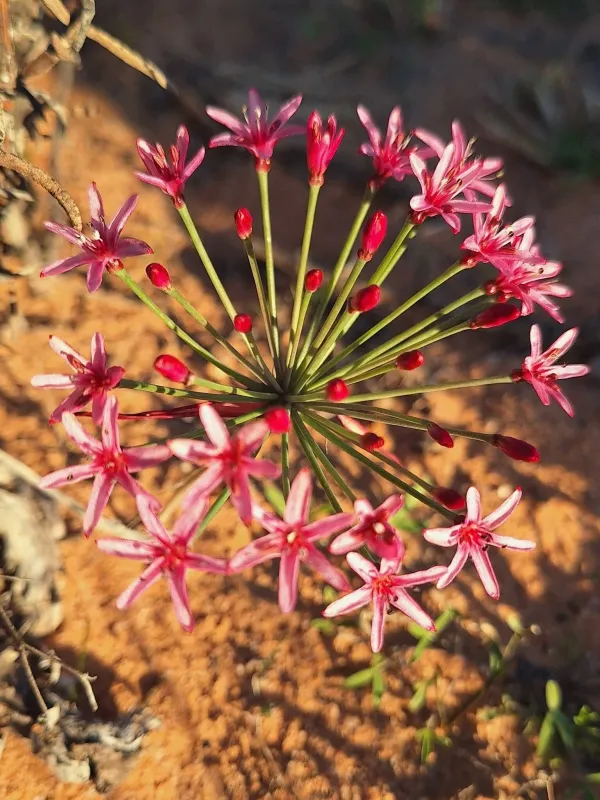
The plant features distinct morphology, including narrow, strap-like leaves and a delicate inflorescence. The flowers are small, star-shaped, and usually display delicate hues of pink or white, which makes them highly attractive for ornamental use.
Climate requirements include a cool, wet winter growing period followed by a hot, dry summer dormancy. In indoor environments or greenhouses, careful temperature management is required to simulate these seasonal changes effectively.
Hessea stellaris serves primarily as a collector's item in the professional horticulture sector. Due to its unique biological cycle and aesthetic qualities, it is often kept in specialized bulb collections rather than mass-market landscapes.
Main diseases and pests
The most significant threat to the survival of Hessea stellaris is bulb rot, usually caused by fungal pathogens when moisture levels remain too high during the plant's inactive period. Maintaining dry conditions is essential during dormancy.
Pests such as mites and aphids can also impact the plant's health. These insects often target the developing flower stalks or leaves, weakening the plant and potentially stunting its growth for the following season.
Effective management includes regular monitoring of the foliage for early signs of infestation. Applying specific systemic insecticides can help manage these pests without harming the delicate bulb structure.
Fungal infections, if identified early, can be treated by isolating the plant and applying fungicide treatments. Proper ventilation is a critical factor in preventing the spread of mold and rot within a greenhouse setting.
Furthermore, growers should prioritize the use of sterile growing media to avoid soil-borne pathogens. A preventative approach, including high-quality substrate and strict water regulation, is the best strategy for long-term cultivation success.