
Sosnowsky's hogweed
Heracleum sosnowskyi Manden.
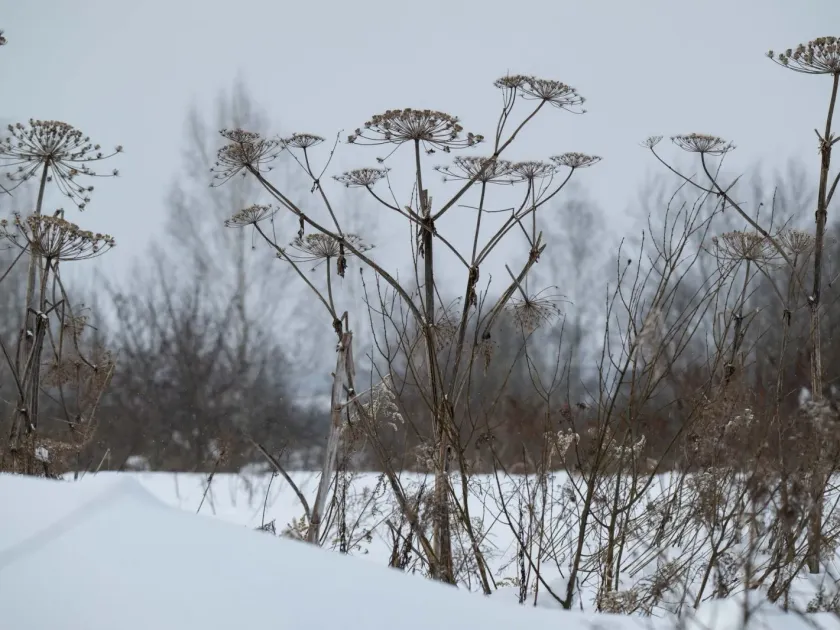
Description
Sowing dates
Sosnowsky's hogweed belongs to the Apiaceae family. It was historically introduced from the Caucasus region as a high-potential silage crop intended to revitalize the livestock sector in the mid-20th century.
The plant is a perennial monocarp that produces a leafy rosette in the first year and a massive flowering stalk in subsequent seasons. Sowing was typically carried out in autumn or early spring, as seeds require a period of stratification to break dormancy.
The species exhibits high plasticity and can thrive in various soil types, though it performs best on fertile loams with consistent moisture levels. Its high competitiveness allows it to establish dominance quickly in new areas.
Agricultural management required careful spacing, as overcrowding suppresses individual plant growth, while sparse sowing can lead to unwanted weed competition within the field.
Despite its high biomass yield, the cultivation project was eventually abandoned due to the phytotoxicity of its sap, which contains furanocoumarins that cause severe blistering when exposed to sunlight.
Growing requirements
The plant demonstrates moderate climatic requirements and is well-adapted to cooler temperate regions. It can survive harsh winters by protecting its buds within the root system.
Hogweed is moisture-loving and sensitive to drought, especially during the rapid development of its rosette leaves. It prefers soils with a neutral or slightly alkaline pH level.
The plant produces the most biomass in areas with a high water table. However, it does not tolerate soil compaction or prolonged flooding, which can lead to root decay.
It requires intense light for optimal development; while it can tolerate light shade during the juvenile stage, lower light levels significantly reduce the sugar content of the biomass.
Effective cultivation requires nitrogen fertilization to support the massive volume of green matter produced over a very short growing season.
Yield
Sosnowsky's hogweed was widely recognized as one of the most productive silage crops available. Yields of green biomass could reach 200–250 tons per hectare in a single season.
The nutritional value of the silage was comparable to top-tier maize or sunflower fodder. It was highly digestible and promoted milk production in dairy cattle.
The success of its use as animal feed relied heavily on precise ensiling techniques to ensure that the chemical profile of the plant changed to safe levels during fermentation.
However, poor silage quality sometimes resulted in milk with an undesirable taste, which was a common issue cited during its commercial implementation.
Today, agricultural use has ceased due to the plant's classification as an invasive species that poses significant threats to biodiversity and human health.
Main diseases and pests
The plant is exceptionally resistant to diseases and pests, a trait attributed to its essential oils and furanocoumarins that act as natural deterrents against insects.
While some fungal leaf spots may occasionally appear, they do not cause significant economic damage or reduction in total biomass yield.
There are no major pests capable of destroying hogweed fields, which contributes to its status as a highly aggressive invader in non-agricultural environments.
The primary natural limitation for the plant is competition with trees and shrubs during the later stages of ecological succession on abandoned lands.
Control efforts in contemporary agricultural settings focus on systemic herbicides, as the plant's rapid recovery from roots makes mechanical control labor-intensive.
Harvesting
Harvesting for silage was strictly performed before the onset of the budding and flowering phase to ensure the lowest concentration of toxic furanocoumarins.
High-capacity forage harvesters equipped with shredding attachments were used to process the large stems before packing them into silage pits for anaerobic fermentation.
Proper compaction in the pits was essential to create the environment necessary for breaking down harmful compounds and preserving the nutritional value.
Seed harvesting was conducted when the central umbels turned brown, indicating full maturity, which ensured the highest potential germination rate for the next season.
Safety was a critical component of the harvest, requiring all personnel to wear protective gear to prevent skin contact with the plant's hazardous sap.