
Helwingia japonica
Helwingia japonica
Description
Growing requirements
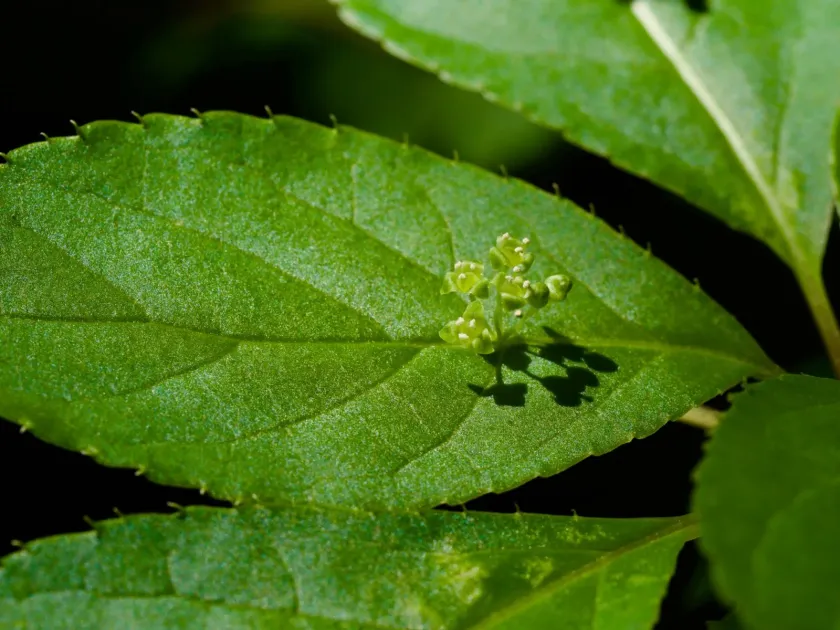
Helwingia japonica, belonging to the Helwingiaceae family, is a unique deciduous shrub native to the temperate forests of East Asia. It is best known for its peculiar botanical feature where flowers and berries bloom directly from the center of its leaves.
The plant thrives in moist, humus-rich, and well-drained soil conditions. It is a shade-loving species, naturally occurring in the forest understory, which makes it an excellent choice for protected areas of the garden with filtered light.
Optimal growth requires a climate with mild summers and sufficient humidity. While it can withstand moderate cold, young plants require protection during severe winters to prevent frost damage to the stems and root system.
Agronomic management involves maintaining consistent soil moisture. Mulching is highly recommended to regulate soil temperature and retain moisture, simulating the natural forest floor environment where the plant originates.
While primarily cultivated as a curiosity for botanical collections, the plant has historical significance in some Asian regions where its young, tender leaves are harvested and cooked as wild forest vegetables.
Main diseases and pests
Spider mites are the most common pests affecting Helwingia, especially in indoor or greenhouse environments. These pests thrive in dry conditions and can cause significant foliage disfigurement if left unchecked.
Root rot is a major threat caused by overwatering or poor drainage. To mitigate this risk, it is essential to ensure that the potting medium remains moist but never waterlogged, as stagnant water leads to rapid root decay.
Fungal leaf spot infections can occur during periods of high humidity and poor ventilation. Keeping the canopy open and ensuring good air circulation around the plants is critical to prevent the spread of these pathogens.
Powdery mildew may appear as a white dusting on the leaves, particularly in crowded planting conditions. Regular inspection and the application of appropriate organic fungicides help in maintaining plant vigor.
Scale insects can occasionally infest the stems, extracting plant sap and weakening the structure of the shrub. Manual removal or the use of horticultural oils is an effective strategy for controlling small outbreaks.