
Helwingia himalaica
Helwingia himalaica
Description
Growing requirements
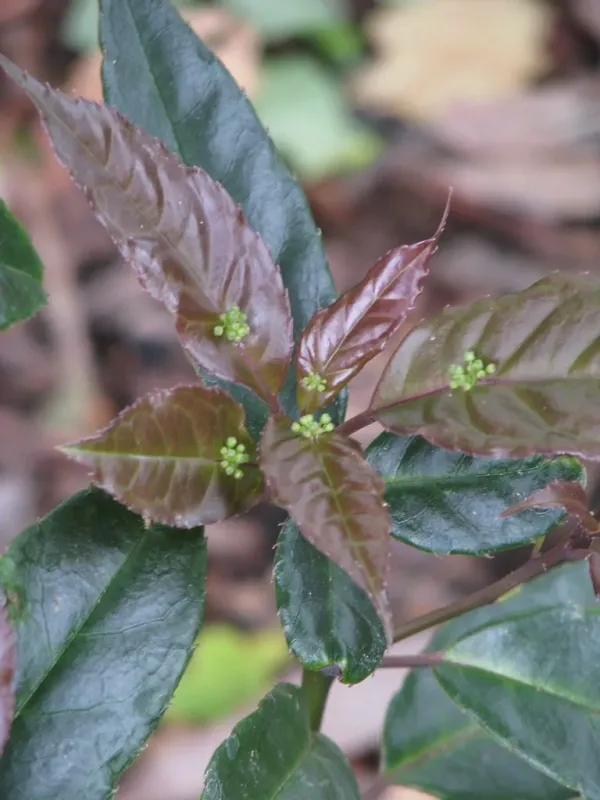
Helwingia himalaica is a distinct botanical species belonging to the Helwingiaceae family. It is widely recognized for its unique biological phenomenon where its flowers and berries emerge directly from the midrib of the leaves.
The plant originates from the high-altitude forests of the Himalayas and parts of China. In cultivation, it requires a shaded environment that mimics its natural forest floor habitat, avoiding intense direct sunlight.
Soil requirements are strict, necessitating well-draining, nutrient-rich, and slightly acidic soil. Consistent soil moisture is essential, as the plant does not tolerate dry periods or prolonged drought.
Agrotechnical practices involve providing consistent irrigation and moderate fertilization during the growing season to ensure vigorous development of its peculiar leaf-bearing reproductive organs.
Commercially and agriculturally, it is utilized as an ornamental specimen in specialized gardens. Additionally, in its native range, the young leaves are harvested as a wild edible vegetable, prized for their unique flavor profile.
Main diseases and pests
The primary threats to this culture include root rot pathogens, which are often encouraged by poor soil drainage and lack of proper aeration in the root zone.
Pests like aphids and spider mites can infest the foliage, particularly when the plant is grown in greenhouse conditions with insufficient air circulation.
Cold stress remains a critical factor; while it thrives in temperate mountains, extreme freezing temperatures can damage the shrub's stems and reduce potential fruit set.
Management of these threats involves periodic inspection of the leaf underside and ensuring that the plant is not kept in overly stagnant conditions during high humidity seasons.
Integrated pest management, including the use of mild horticultural oils, is recommended to keep the shrub healthy and to maintain its aesthetic value for landscape use.