
Helminthotheca aculeata
Helminthotheca aculeata
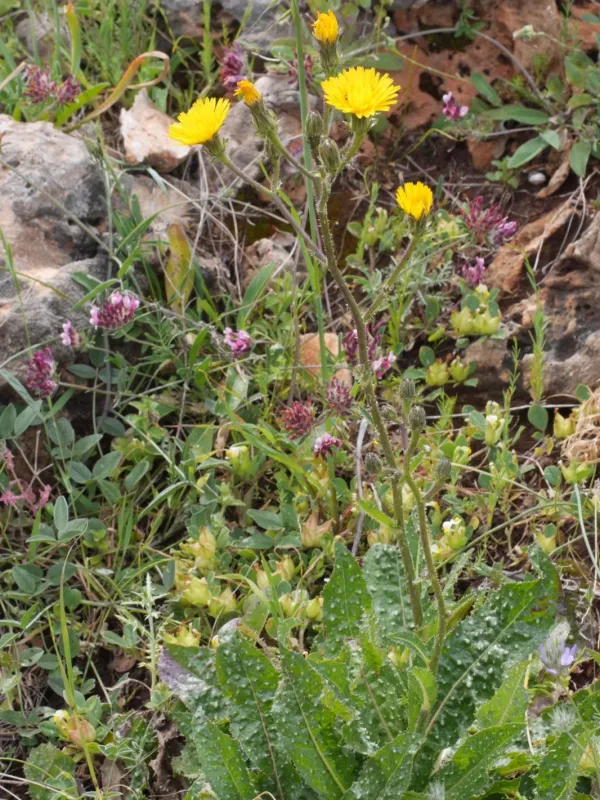
Description
Sowing dates
This species is not commercially farmed, and therefore standardized sowing protocols for agricultural production do not exist.
In its native habitat, germination is synchronized with the onset of the autumn rainy season following the summer dormancy period.
Seeds are small and light-dependent, meaning they require shallow placement in the soil to successfully emerge.
Temperature fluctuations between day and night are crucial factors that trigger the germination process in natural soil banks.
Experimental propagation indicates that a cool, moist stratification period can improve the uniformity of seedling emergence.
Growing requirements
Helminthotheca aculeata is a member of the Asteraceae family, characterized by its distinctive, prickle-covered foliage.
The plant is native to the Mediterranean region, thriving in environments with mild winters and hot, dry summers.
It prefers well-drained, nutrient-poor, and stony soils where it encounters minimal competition from taller, more aggressive plants.
Full sun exposure is essential for the plant to complete its life cycle and produce viable seeds successfully.
The plant exhibits remarkable tolerance to saline conditions, frequently appearing in coastal habitats or disturbed landscapes.
Yield
There is currently no agricultural yield associated with this plant, as it is considered a wild species rather than a crop.
The total vegetative biomass is insufficient for livestock fodder, especially given the plant's prickly texture and defensive structures.
Its primary productivity is measured by its capacity to propagate within local ecosystems rather than by economic weight.
Seed production per individual plant is relatively high, providing significant potential for dispersal and population expansion.
Harvesting for research or conservation purposes is the only context in which yield is managed or quantified by botanical specialists.
Main diseases and pests
Fungal pathogens, particularly those causing leaf spotting and mildew, can affect the plant during periods of excessive humidity.
Root system damage caused by soil-borne insects can be a limiting factor in certain types of coastal sandy soils.
Lepidopteran larvae are common pests that feed on the foliage, occasionally causing significant defoliation in late spring.
Aphid infestations on flower buds can hinder the development of healthy seeds by draining essential plant sap.
Despite these threats, the plant remains robust due to its evolved defenses, including the dense, sharp prickles on its leaves.
Harvesting
Seed collection requires manual timing, as the achenes are dispersed by wind soon after the maturation of the flower heads.
Harvesting should be performed when the involucre begins to turn brown and the pappus begins to spread, indicating maturity.
Cleaning the seed lot requires specialized sieving to separate the fertile seeds from the chaff and sharp bract fragments.
Proper drying is essential to prevent mold growth, which can quickly degrade the viability of stored seed material.
Seeds must be stored in a cool, dry, and dark environment to maintain their germination potential over successive seasons.