
Heliconia mutisiana
Heliconia mutisiana
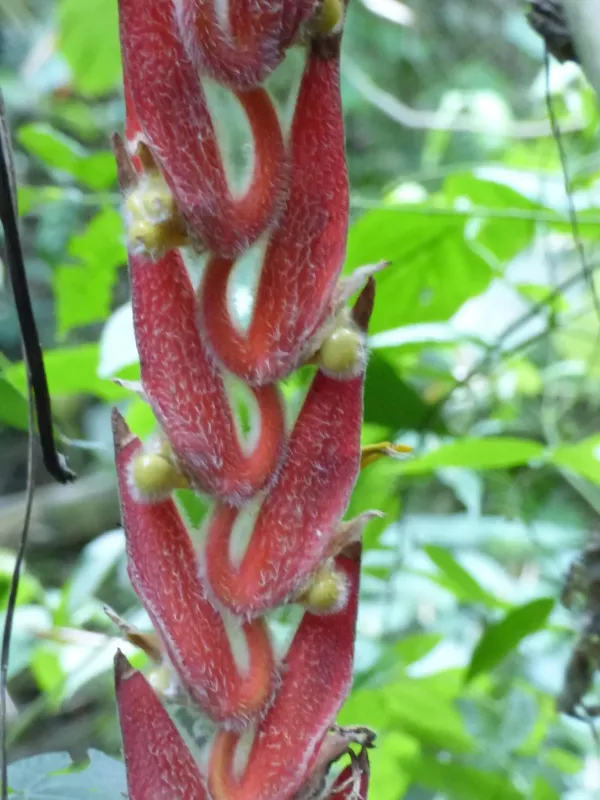
Description
Growing requirements
Heliconia mutisiana is a perennial herbaceous plant belonging to the Heliconiaceae family. It is native to the cloud forests of Colombia, where it thrives in consistently moist and warm environments.
The plant exhibits distinctive botanical traits, including large, paddle-shaped leaves and highly colorful, complex inflorescences formed by bracts that protect the small flowers inside.
Successful cultivation requires a tropical climate with high humidity levels, ideally maintained between 70% and 85%. Any significant drop in air humidity can negatively affect the development of new leaves and bracts.
Soil requirements focus on high organic matter content, excellent drainage, and a slightly acidic pH. In agricultural settings, growers often use specialized peat-based substrates to prevent compaction and root suffocation.
Regular fertilization is essential for Heliconia mutisiana, as it is a nutrient-demanding crop. A balanced NPK ratio is recommended, with increased potassium levels during the floral development phase to ensure high-quality blooms.
Main diseases and pests
Root and crown rots are the most significant threats to Heliconia mutisiana, often exacerbated by overwatering or poorly draining substrates that create anaerobic soil conditions.
Common insect pests include spider mites, which thrive in dry greenhouse conditions, and various species of scale insects that suck sap from stems and leaves, weakening the crop.
Fungal diseases like leaf spot (caused by Helminthosporium or Curvularia) can spread rapidly if air circulation is insufficient within the greenhouse structure.
Integrated Pest Management (IPM) practices are highly recommended, including the use of biological control agents and maintaining optimal spacing between plants to improve airflow.
Regular monitoring for symptoms of viral infections, such as leaf mosaic or stunting, is essential, as these diseases are often spread by insect vectors and require the immediate removal of infected plants.
Harvesting
Harvesting for the cut flower market occurs when the inflorescence is fully developed, but before the true flowers inside the bracts have fully opened or aged.
Cutting should be performed using sterilized garden tools to prevent the transmission of pathogens between plants. The stems are typically cut at the base, leaving sufficient foliage to support the remaining plant.
Post-harvest handling is critical for shelf life. Stems must be kept in clean water with floral preservatives and stored in temperature-controlled environments, ideally between +12°C and +15°C.
Product quality is graded based on the length of the stem, the vibrancy of the bract colors, and the absence of mechanical damage or pest-related blemishes on the leaves.
Efficient logistics and careful packing are necessary to prevent bruising of the delicate bracts during transport to distribution centers.