
Heliconia lingulata
Heliconia lingulata
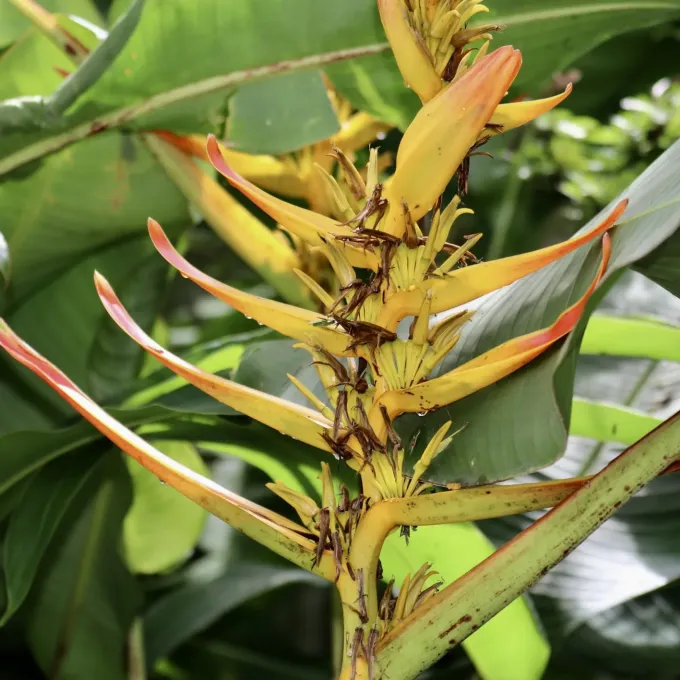
Description
Sowing dates
Propagation of Heliconia lingulata is primarily achieved vegetatively by dividing the robust rhizome. The ideal time for this task is at the beginning of the active growing season as the plant emerges from dormancy.
When propagating by seed, the process requires scarification of the hard seed coat followed by soaking in warm water for several days to improve germination rates.
Sowing should be performed in a loose, well-draining substrate at a depth of up to 2 centimeters. Maintaining a stable temperature between 25 and 30 degrees Celsius is critical for success.
Young plants should be transferred to permanent containers or beds only after the risk of night frost has passed and temperatures remain consistently high.
Selection of the planting site is crucial; the plants require protection from harsh midday sun, which can cause severe scorching of the large leaf blades.
Growing requirements
Heliconia belongs to the Heliconiaceae family and is native to the tropical forests of Central and South America. It thrives in humid, warm climates and avoids areas with significant temperature fluctuations.
The soil mixture must be nutrient-rich and possess excellent drainage properties. Peat-based substrates supplemented with perlite and leaf mold are considered ideal.
High relative humidity, ideally between 70% and 80%, is essential. Commercial greenhouses often utilize specialized misting systems to maintain these moisture levels consistently.
Regular and abundant watering is required throughout the growing season. The substrate should be kept consistently moist but never waterlogged to prevent root system collapse.
Regular fertilization with complex mineral fertilizers is necessary. High-nitrogen feeds are used during the growth phase, while phosphorus-heavy formulas support blooming.
Yield
The productivity of Heliconia lingulata is measured by the number of marketable inflorescences produced per season. A healthy mature plant typically yields 3 to 5 stems per season.
Once harvested, the inflorescences exhibit high longevity, lasting between 2 and 3 weeks in a vase, which contributes to their high market value for floristry.
Maximum yield is generally observed starting from the third or fourth year when the rhizome system has fully expanded to support multiple vegetative stems.
Greenhouse cultivation allows for year-round production of inflorescences, provided that light duration and temperature regimes are strictly controlled.
Commercial viability is closely linked to planting density; typically, 2 to 3 plants per square meter is the recommended standard for professional facilities.
Main diseases and pests
The primary pests affecting Heliconia lingulata include spider mites and mealybugs, which tend to proliferate in conditions with insufficient air humidity.
Control strategies involve the use of systemic insecticides and miticides, alongside regular rinsing of foliage with warm water to discourage pest colonization.
Fungal diseases, including root rot, are common symptoms of improper irrigation management or poor soil drainage systems within the planting area.
Viral infections can cause leaf spotting and stunted growth; affected plants should be removed immediately to prevent spread to healthy specimens.
- Regular inspection of the leaf undersides for early pest detection.
- Strict quarantine protocols for new plant materials.
- Maintaining absolute cleanliness of greenhouse tools and equipment.
Harvesting
Harvesting of inflorescences should occur during the morning hours when the lower bracts are fully colored, but the top ones remain tightly closed.
Cutting is performed using sterilized shears as close to the base as possible to avoid damaging the main rhizome and emerging vegetative shoots.
Immediately after cutting, the stems should be placed in clean water to prevent air bubbles from obstructing the vascular system, which can reduce vase life.
Transportation of the harvested crop requires temperature control at 12–15 degrees Celsius to protect the delicate bracts from deformation and damage.
Post-harvest management involves applying a balanced fertilizer to help the plant recover the nutritional reserves expended during the flowering process.