
Hebenstretia repens
Hebenstretia repens
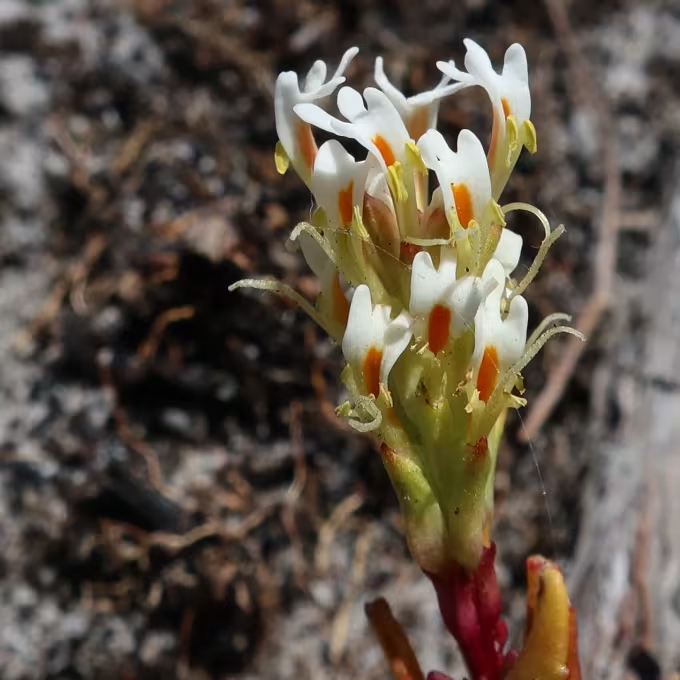
Description
Growing requirements
Hebenstretia repens, commonly known as creeping hebenstretia, is a perennial herbaceous plant belonging to the Scrophulariaceae family. It is highly valued in ornamental horticulture for its dense, mat-forming growth habit and highly fragrant flower spikes.
Native to Southern Africa, this species has evolved to thrive in open, sun-drenched environments. Cultivation success largely depends on providing full sun exposure, which ensures the development of strong stems and promotes a prolific flowering cycle throughout the growing season.
Soil requirements for this crop focus primarily on drainage. It performs best in sandy or rocky soils where moisture does not accumulate. Gardeners should avoid heavy clay soils, as poor aeration and waterlogging often lead to physiological decline and plant loss.
The climate requirements include moderate temperatures, though the plant is notably hardy once established. While it possesses inherent drought-tolerant traits typical of its origin, providing supplementary water during extreme heat will enhance its aesthetic appeal and overall vigor.
In agricultural and landscaping contexts, Hebenstretia repens serves as an excellent ground cover. Its utility in rock gardens and hillside stabilization is well-documented, as it effectively suppresses weed growth while adding a unique texture to the landscape.
Main diseases and pests
The primary threats to Hebenstretia repens are related to fungal infections triggered by excessive soil moisture and poor air circulation. Root rot and damping-off can be devastating, necessitating strict adherence to watering schedules and the use of well-drained planting sites.
Pests such as aphids and spider mites can infest the foliage, particularly during dry and hot spells. Regular monitoring is recommended to prevent significant damage to the floral spikes, and appropriate organic or synthetic insecticides should be applied upon the detection of infestations.