
Haplopteris scolopendrina
Haplopteris scolopendrina
Description
Growing requirements
Haplopteris scolopendrina is a unique fern belonging to the Pteridaceae family. Native to tropical regions of Africa, Asia, and the Indian Ocean islands, this plant thrives as an epiphyte, attaching itself to trees and rocky crevices in humid forest environments.
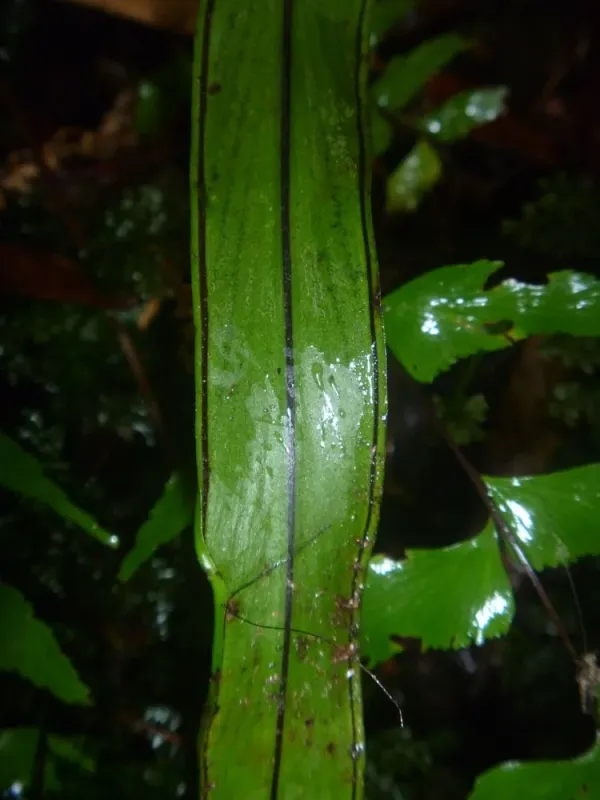
Botanically, it is distinguished by its long, strap-like, leathery fronds that emerge from a creeping rhizome covered in scales. This morphology allows the plant to effectively capture moisture and nutrients from the air and decaying debris trapped around its roots.
Cultivation requirements necessitate high humidity levels, ideally above 70%, and stable temperatures between 20°C and 25°C. Exposure to cold drafts or rapid temperature fluctuations can severely stress the plant, leading to frond discoloration and loss.
The potting medium must be exceptionally well-draining, mirroring its natural epiphytic habitat. A mixture of orchid bark, high-quality peat, perlite, and long-fiber sphagnum moss provides the essential aeration needed for healthy rhizome development.
Light management is crucial, as the plant prefers bright, indirect sunlight or filtered light. Direct sun exposure will scorch the fronds quickly, necessitating a position in a shaded location or under artificial grow lights tuned to the appropriate spectrum for ferns.
Main diseases and pests
The primary threats to this fern include fungal root rots, typically caused by overwatering or poor drainage. Once established, these pathogens are difficult to eradicate, often necessitating the replacement of the entire substrate and root cleaning.
Common indoor pests such as scale insects and mealybugs frequently hide along the midrib of the fronds. Their presence saps the plant's vitality, leading to stunted growth and the potential for sooty mold growth on honeydew secretions.
Spider mites are a significant risk in low-humidity environments. These microscopic pests feed on the cellular sap, resulting in stippling and webbing that can permanently mar the aesthetic appearance of the leathery leaves.
Chemical sensitivity is a hallmark of this species, requiring caution when applying pesticides. It is recommended to use systemic or biological control methods to mitigate pest pressure without damaging the sensitive frond tissues.
Maintenance of optimal environmental parameters, particularly adequate airflow and clean water sources, is the most effective defense against the majority of diseases affecting this species in cultivation.