
Haplopteris elongata
Haplopteris elongata
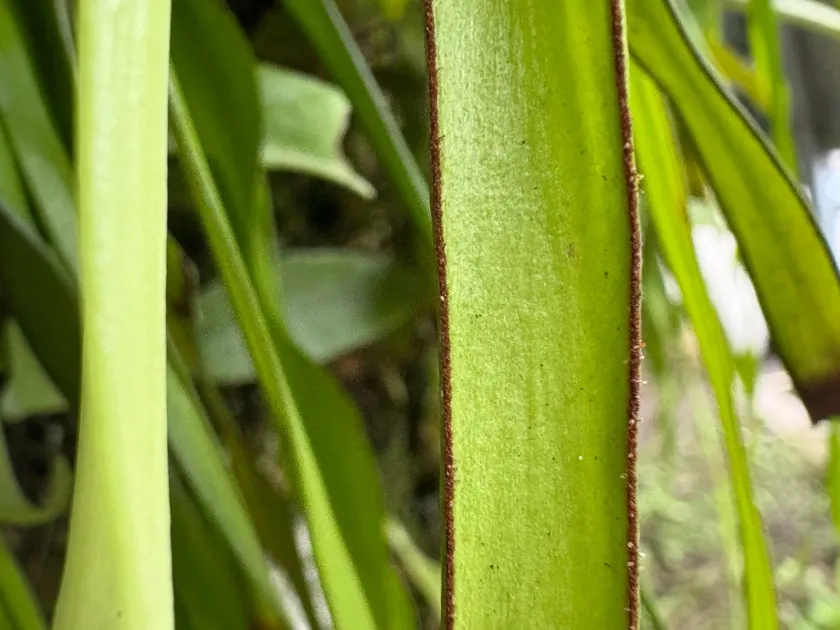
Description
Growing requirements
Haplopteris elongata is a specialized species of fern belonging to the Pteridaceae family. It is predominantly found in tropical regions, growing primarily as an epiphyte on tree trunks or as a lithophyte in rock crevices within humid forests.
The plant is defined by its long, simple, and ribbon-like fronds. These leaves have evolved to survive in niches where water availability is periodic, showing distinct xerophytic adaptations despite being members of the moisture-loving fern group.
For successful cultivation, Haplopteris elongata requires a high humidity environment, ideally maintained between 70% and 85%. It thrives in shaded or semi-shaded locations, as direct sunlight can easily cause physiological stress and leaf scorching.
The growing medium should mimic the natural environment, consisting of coarse orchid bark, perlite, and sphagnum moss. Ensuring proper aeration of the rhizome is crucial to prevent the development of anaerobic conditions that lead to plant decay.
Temperature management is vital, with a preferred range between 20°C and 25°C. The species is highly sensitive to cold drafts and rapid temperature fluctuations, which can disrupt its slow-growing cycle and impact its overall aesthetic appearance.
Main diseases and pests
The main threats to the plant health include root rot, which typically stems from poor drainage or waterlogged substrates. Additionally, common glasshouse pests such as spider mites are significant threats, especially in environments where air circulation is inadequate.