
Graptopetalum filiferum
Graptopetalum filiferum (S. Watson) J. Whitehead
Description
Growing requirements
Graptopetalum filiferum is a perennial succulent species belonging to the Crassulaceae family. Originating from the rugged terrains of Mexico, this plant has adapted to survive in rocky, nutrient-poor soils with infrequent rainfall, making it a classic example of xerophytic adaptation.
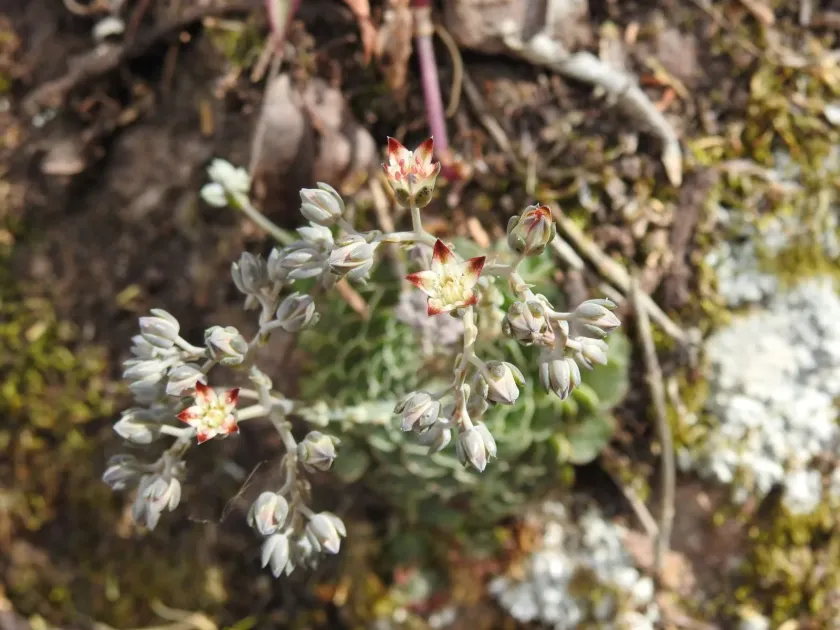
The plant is distinguished by its symmetrical, rosette-forming structure. Each leaf is tipped with a distinctive, thin, thread-like filament, which is the botanical trademark of this species. When cultivated correctly, it forms tight, ground-hugging colonies that display vibrant coloration under stress-induced conditions.
Optimal growth requires intense light exposure. To maintain the compact rosette form and the characteristic coloration, the plant should be placed in the brightest possible location, ideally with several hours of direct sunlight. Insufficient light leads to etiolation, causing the leaves to stretch and turn pale.
The agricultural substrate for Graptopetalum must be exceptionally fast-draining. A typical mix includes 50% inorganic material, such as pumice, perlite, or grit, and 50% high-quality potting soil. Proper drainage holes in the container are non-negotiable to prevent moisture buildup.
Temperature management follows a seasonal cycle. During the growing season, temperatures between 20°C and 25°C are ideal. During the winter dormancy, the plant benefits from cooler temperatures (around 10°C) and significantly reduced irrigation, which mimics its natural seasonal rhythm.
Main diseases and pests
The most critical threat to Graptopetalum filiferum is root rot caused by overwatering or poor soil drainage. Signs of distress include yellowing, mushy leaves, and a soft stem base. Immediate repotting into dry, fresh substrate is often the only way to save an affected plant.
Mealybugs represent the primary pest challenge. These small insects thrive in the leaf axils, where they feed on plant sap. Early detection is key; manual removal with a cotton swab dipped in isopropyl alcohol is an effective non-chemical approach for minor infestations.
Spider mites can also become an issue in environments with low humidity and stagnant air. These pests cause fine webbing and stippling on the leaves. Increasing airflow and occasionally cleaning the leaves can effectively deter these pests.
Fungal infections can arise if moisture remains on the foliage for too long. Always ensure that the water is applied directly to the soil and not onto the leaves, as the succulent tissue can easily absorb or trap water, leading to localized decay.
In cases of severe infestation, systemic insecticides specifically labeled for indoor succulents are recommended. Always perform a spot test on a single leaf before treating the entire plant to ensure the solution does not cause phytotoxicity or leaf spotting.