
Graptopetalum paraguayense
Graptopetalum paraguayense (N. E. Br.) E. Walther
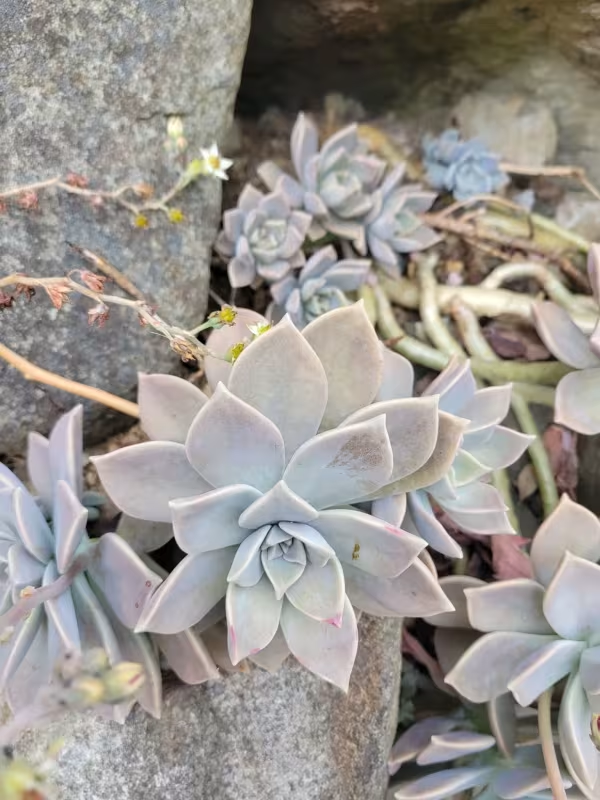
Description
Growing requirements
Graptopetalum paraguayense, commonly known as the ghost plant, is a perennial succulent species belonging to the Crassulaceae family. It is native to the Mexican state of Tamaulipas and is highly valued in horticulture for its ornamental rosettes and adaptability to various environments.
The crop requires high light intensity to maintain its characteristic compact form and glaucous coloration. In greenhouse or indoor conditions, supplemental lighting may be necessary during the winter months to prevent etiolation and structural weakening of the rosettes.
Soil requirements focus on drainage and aeration. A substrate consisting of mineral components, such as pumice, coarse sand, and a small portion of organic matter, is essential. The medium must have a low water-holding capacity to mimic the plant's native rocky habitat.
Temperature management is critical for the plant's physiological rhythm. It thrives in warm conditions during the growing season, while a cooler winter rest period (10–14 °C) is vital to stimulate metabolic stability and prepare the plant for the next flowering cycle.
Watering frequency should be determined by the moisture level of the substrate rather than a rigid calendar. The soak-and-dry method is recommended, ensuring the soil is completely dehydrated before the next application to prevent root hypoxia.
Main diseases and pests
Root rot, caused by fungal pathogens such as Pythium or Phytophthora, represents the primary threat to this crop. Over-watering and inadequate soil porosity are the leading environmental factors facilitating these infections.
Mealybugs (Pseudococcidae) are the most frequent pests, settling in the tight crevices between leaves. They extract plant fluids and secrete honeydew, which can further encourage the growth of sooty mold, reducing the aesthetic and photosynthetic value of the plant.
Pest management relies on mechanical removal or the application of horticultural oils and systemic insecticides. Early detection is paramount, as dense leaf arrangements make it difficult for contact sprays to reach deep-seated pest colonies.
Fungal infections often manifest as soft, dark spots on the foliage or stems. Upon discovery, the affected tissues should be excised with a sterile blade, and the plant should be treated with appropriate fungicides and relocated to a well-ventilated, drier area.
Proper hygiene, including the sterilization of potting equipment and quarantine of new plant material, is essential to minimize the risk of pest and disease outbreaks within a commercial or hobby collection.