
Graptopetalum bellum
Graptopetalum bellum (Moran & J. Meyrán) D. R. Hunt
Description
Growing requirements
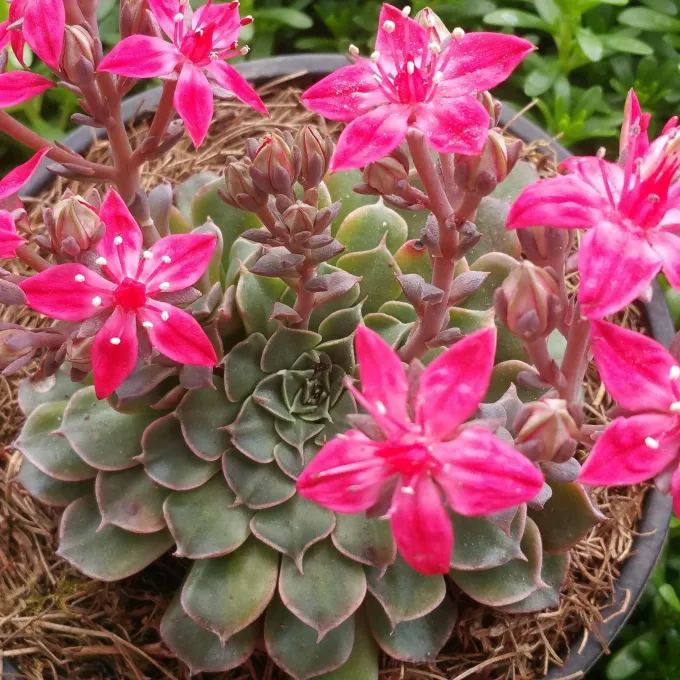
Graptopetalum bellum is a fascinating succulent species belonging to the Crassulaceae family, native to the rocky cliffs of Mexico. It is highly valued by collectors for its compact rosettes and vibrant, star-shaped flowers that appear during the spring and early summer.
This species requires bright, filtered sunlight to maintain its compact growth form and prevent etiolation. While it is highly adapted to arid conditions, it thrives best when provided with at least 6 hours of indirect light per day in a well-ventilated area.
The substrate must be extremely porous to ensure rapid drainage, mimicking the rocky crevices of its native habitat. A mixture of pumice, perlite, and coarse sand combined with a small amount of organic peat is ideal for container cultivation.
Watering should follow a strict 'soak and dry' method, where the soil is allowed to dry out completely between waterings. During the winter dormancy period, the plant should be kept almost completely dry to simulate its natural environment and prevent rotting.
Propagation is most commonly achieved through leaf cuttings or by detaching small offsets from the base of the mother plant. This plant is best suited for small decorative pots or specialized rock gardens where drainage can be carefully monitored.
Main diseases and pests
The primary health risk for this plant is root rot, induced by excessive moisture or poor drainage. Once the roots begin to decay, the infection often spreads quickly to the stem and leaves, making the plant difficult to save.
Mealybugs are the most common insect pests, often hiding in the crevices between the succulent leaves. These pests are best managed through targeted application of horticultural oils or manual removal using an alcohol-soaked swab.
Root mealybugs can also inhabit the root zone, often causing stunted growth without obvious external symptoms. Periodic inspection of the root system during repotting is highly recommended to detect any hidden infestations.
Environmental stress, particularly sudden changes in light intensity or extreme humidity, can weaken the plant and make it susceptible to fungal infections. Stable environmental conditions are crucial for long-term plant health.
Mechanical damage to the leaves or stem increases the risk of bacterial entry. Always use sterilized tools when taking cuttings or performing maintenance to ensure the plant remains free from pathogens.