
Gompholobium cyaninum
Gompholobium cyaninum
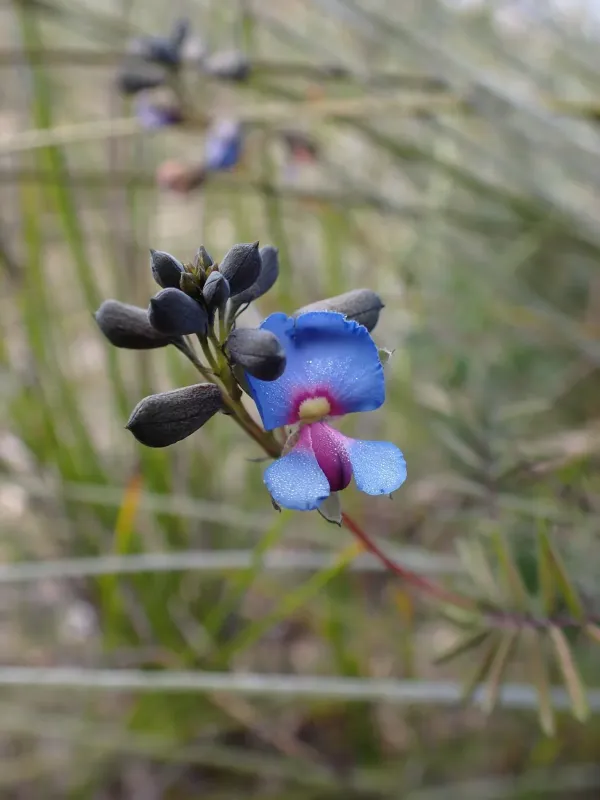
Description
Growing requirements
Gompholobium cyaninum is a member of the Fabaceae family, native to specific regions of Western Australia. This small shrub is recognized for its unique aesthetic traits and its specialized adaptation to the nutrient-poor soils characteristic of its endemic environment.
The successful cultivation of this species requires meticulous attention to drainage. Because it originates from habitats with sandy soils, any waterlogging in the root zone can prove fatal to the plant. Incorporating coarse sand or fine gravel into the soil mix is a standard practice to ensure adequate aeration.
Regarding climate, the plant thrives in areas with a distinct seasonal cycle, mirroring the Mediterranean-style environment of its origin. It requires full sunlight to maintain its structural integrity and to promote healthy flower development, making it unsuitable for shaded agricultural zones.
Agronomic management must prioritize low-phosphorus inputs. Similar to many Australian native plants, Gompholobium species possess specialized root structures that are extremely sensitive to high levels of phosphorus fertilizer, which can quickly lead to toxic accumulation within the plant tissue.
Beyond its ornamental appeal, the species is significant for its ecological role. As a legume, it contributes to nitrogen fixation in its native ecosystem. Current interest in this plant focuses on preserving its genetic diversity and understanding its physiological adaptations to harsh, nutrient-deficient environments.